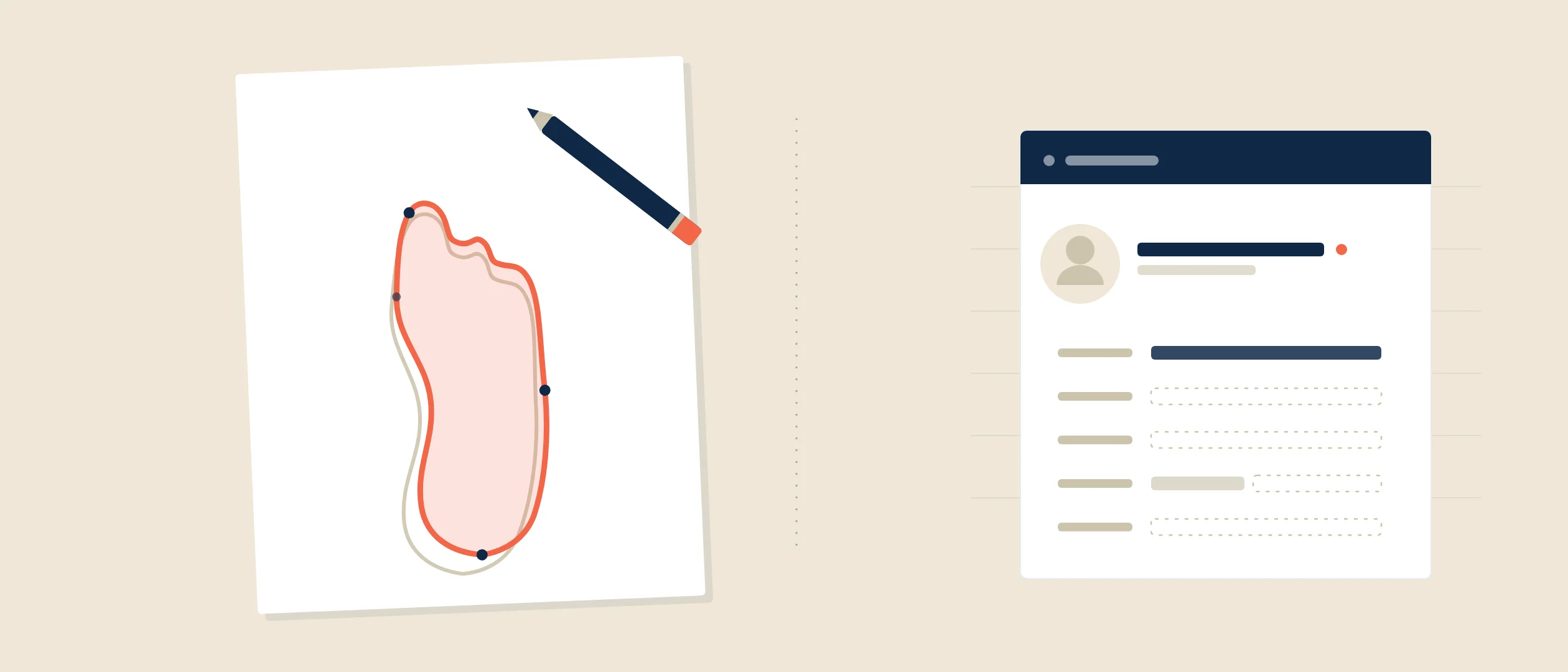
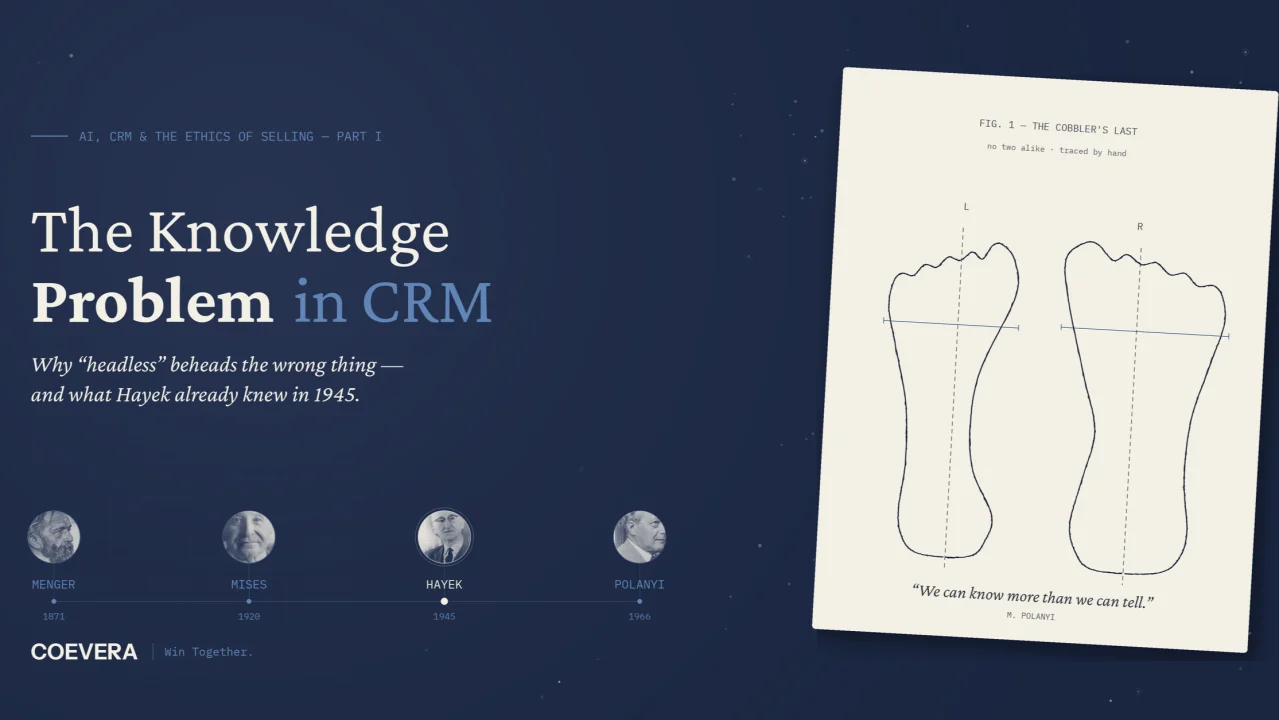
As a boy in Austria, I spent many hours with a family of cobblers — master craftsmen, among the finest of their trade. One memory has never left me. My friend would place me on a sheet of paper and trace the outline of each foot with a pencil. What the pencil revealed surprised me every time: my two feet were not the same. Not approximately the same — visibly, measurably different. A shoe that truly fits demands a separate last for each foot.
Decades later, I have come to believe that this sheet of paper holds the answer to the most consequential design question in enterprise software: where does the knowledge in a business actually live — and can a machine ever hold all of it?
The knowledge that cannot be typed in
What did my cobbler friend actually know? He knew which curve belonged to which foot, where the pressure would fall after a day of walking, how the leather would yield over months of wear. Try to write all of that into a database and you will fail — not because the schema is too small, but because the knowledge itself was never propositional to begin with. The philosopher Michael Polanyi gave this phenomenon its permanent name:
We can know more than we can tell.
— Michael Polanyi, The Tacit Dimension (1966)
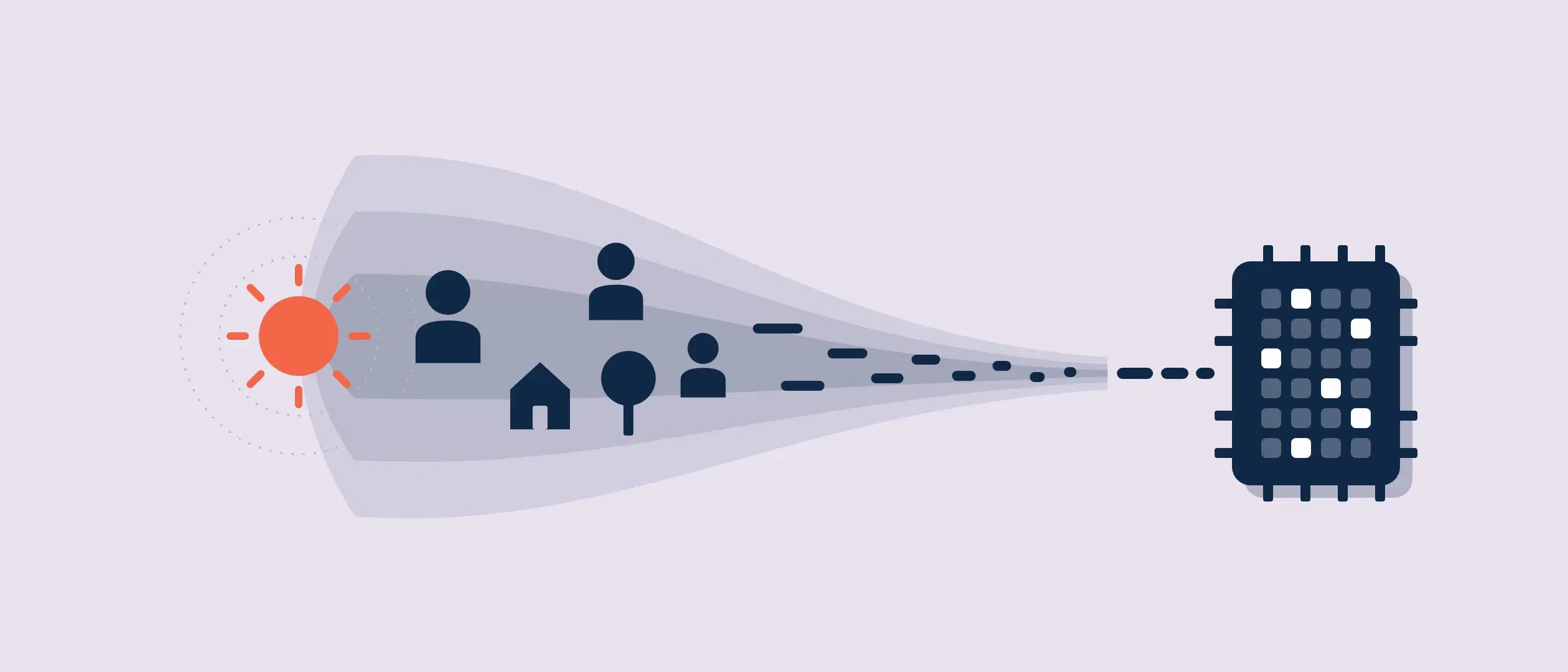
Polanyi called it tacit knowledge — the silent dimension. It is not vague, not mystical, not irrational. It is simply unwritable, and it always will be. And it is precisely this dimension that distinguishes a great salesperson: the feel for the moment a customer hesitates, the ability to read a room of eight stakeholders, each carrying a different interest, a different vantage point, a different fear. Consider what is at stake here: about one in nine workers sells for a living, and Daniel Pink's research finds the rest spend some 40 percent of their working time persuading, influencing and moving others. If we locate the knowledge of selling in the wrong place, we will build the wrong systems — and then automate the mistake at scale.
A debate settled in Vienna — eight decades ago
The question of whether knowledge can be gathered into one central brain is not new. It was fought out, and in my view settled, by the Austrian School of Economics. In 1945, Friedrich August von Hayek published "The Use of Knowledge in Society" in the American Economic Review, his answer to the central planners of his era. The knowledge that matters, Hayek argued, never exists in concentrated or integrated form. It exists only as
the dispersed bits of incomplete and frequently contradictory knowledge which all the separate individuals possess … above all, the knowledge of the particular circumstances of time and place.
— F. A. von Hayek, "The Use of Knowledge in Society," 1945
From this follows the blow that history confirmed: because the decisive knowledge is dispersed, personal, and bound to fleeting moments, no central authority can ever collect it. Central planning fails not from bad intentions but from epistemological impossibility — a verdict the collapse of the planned economies later delivered in full.
Hayek did not arrive at this alone. Ludwig von Mises had demonstrated in 1920, in "Economic Calculation in the Socialist Commonwealth," that without market prices there can be no rational economic calculation at all. And both men built on Carl Menger, whose Principles of Economics (1871) relocated value itself — away from objects and into the subjective judgment of the acting human being. Menger, Mises, Hayek, Polanyi: four thinkers, one continuous insight. Knowledge lives in persons, not in tables.
Enter the new central planner
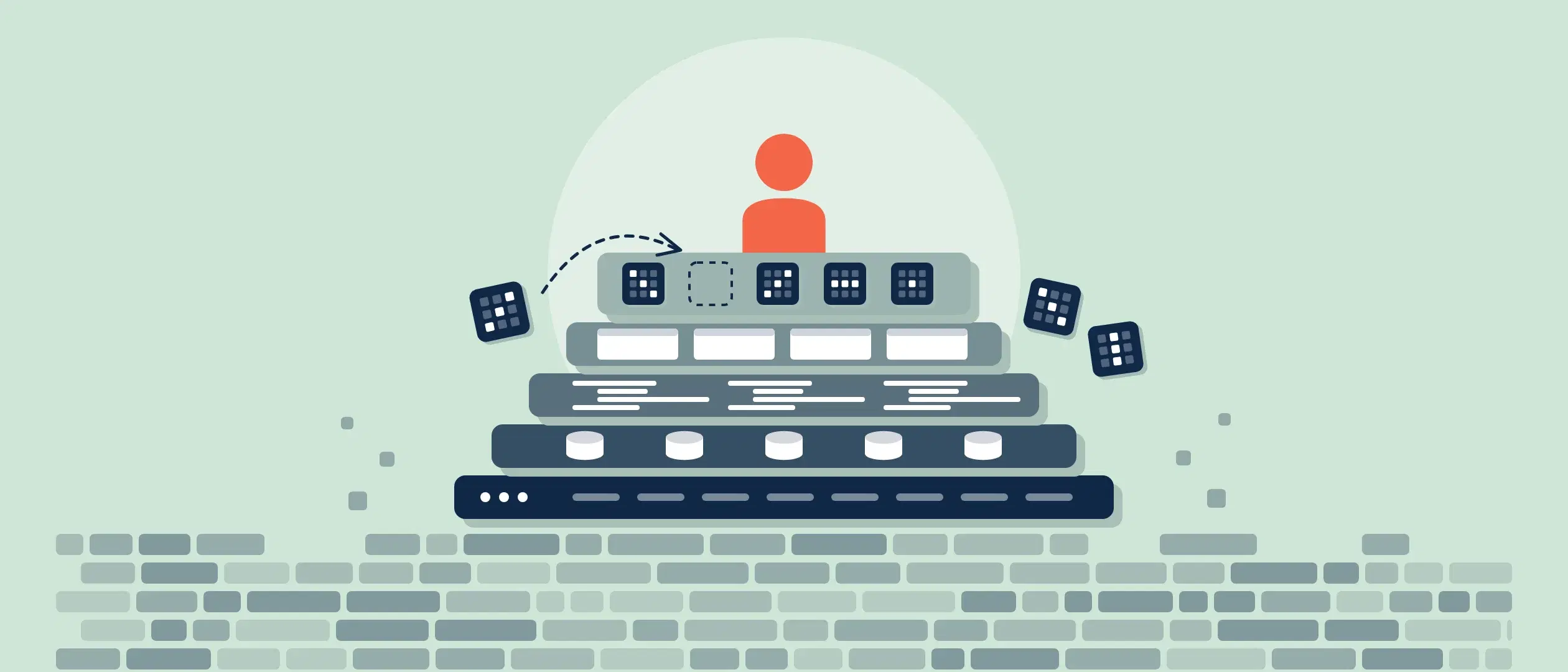
Now bring this lineage into the present. On April 15, 2026, at its TDX conference in San Francisco, Salesforce announced "Headless 360": the platform dissolved into APIs, MCP tools, and command-line calls, operated end to end by AI agents. Weeks earlier, co-founder Parker Harris had compressed the philosophy into one question — why should anyone ever log into Salesforce again? The interface disappears; the agents run the data; the human being is quietly reclassified as overhead.
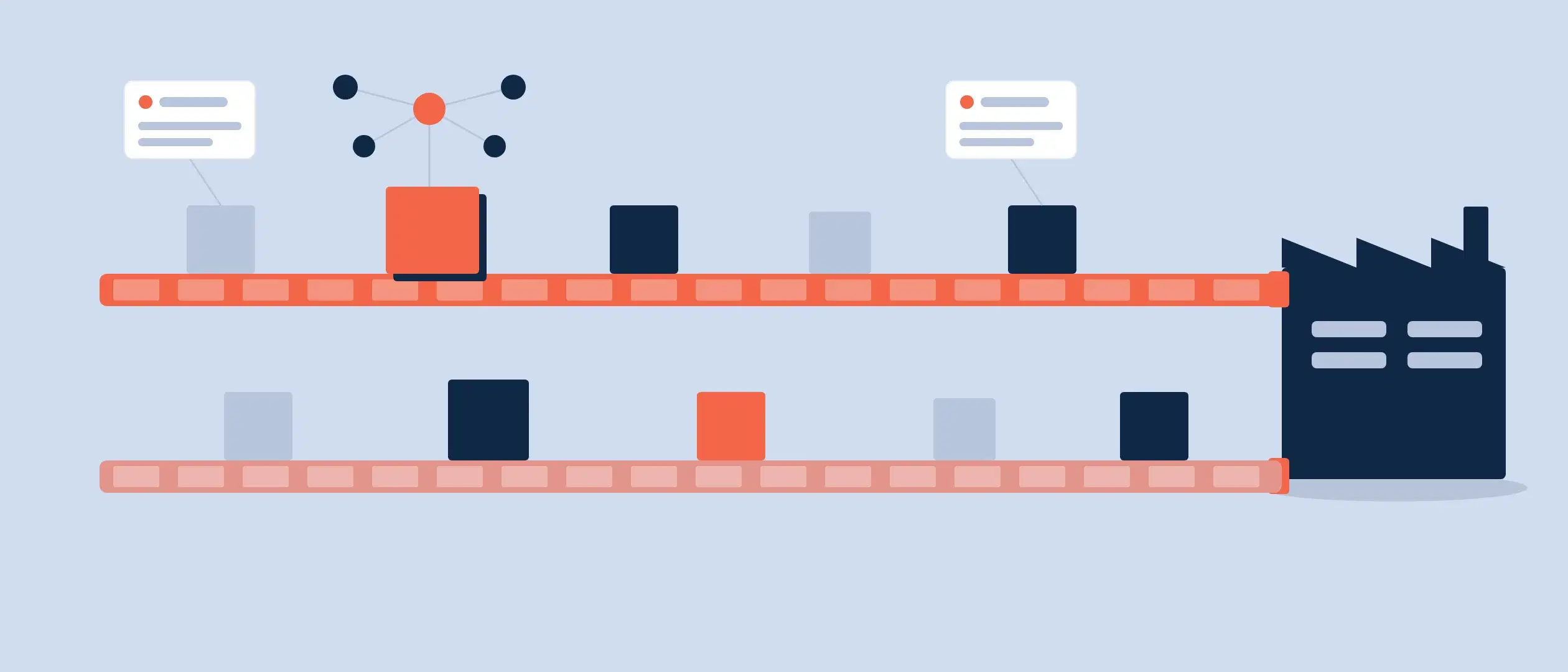
I want to name this for what it is: the central-planning conceit, rebuilt in software. The promise is the same one Hayek dismantled — that with enough data, constantly refreshed, a central intelligence can substitute for the dispersed judgment of the people on the ground. But the CRM record, however rich, is incomplete by nature. The instinct, the relationship, the unwritten context in the salesperson's mind — none of it is in the statistics, and none of it ever will be.
A 150-year-old caricature, now running in production
The intellectual error behind this has a name and a long rap sheet: homo oeconomicus, the perfectly informed, purely calculating man. From that caricature grew the hope that statistics could one day account for all of economic life. The Austrian School rejected this formalism from the beginning — and so, remarkably, did the early economists themselves. The Viennese economist Julius Friedrich Gans von Ludassy attacked the mechanical image of economic man in his thousand-page "Die wirtschaftliche Energie" as early as 1893; the French economist Claudio Jannet had given the caricature its Latin name in 1878 precisely in order to attack it, and by 1883 Charles Stanton Devas was deriding "a ridiculous homo oeconomicus" in his Groundwork of Economics. The reduction of the human being to a calculating machine was suspect long before anyone could compile it into software.
Which is exactly what we are doing today — if we let it happen. A CRM built on the premise that a salesperson can be replaced by a data record does not innovate. It automates a 150-year-old mistake, only faster and at greater expense.
Two architectures, two views of the human being
Every CRM vendor must now choose between two worldviews, whether they admit it or not.
The first — the headless logic — holds that the data is the business, the agents operate the data, and the human is residual. It is the planner's dream in a new costume.
The second — the one we have chosen at Coevera — holds that knowledge lives in the human being, and that AI has exactly one legitimate mission: to place everything in the salesperson's hands. This conviction is built into the product. Our Buying Center maps the real actors in a deal and makes visible who influences whom, and how. Our AI-generated Org Charts render the structure of an account so that the human can understand it faster — not so that a machine can act in the human's place. AI as amplifier, never as planner. Human-in-command — which is something quite different from human-only.
AI that amplifies the salesperson
See what a CRM looks like when AI is built to put knowledge in the human's hands — not to replace them.
Talk to Coevera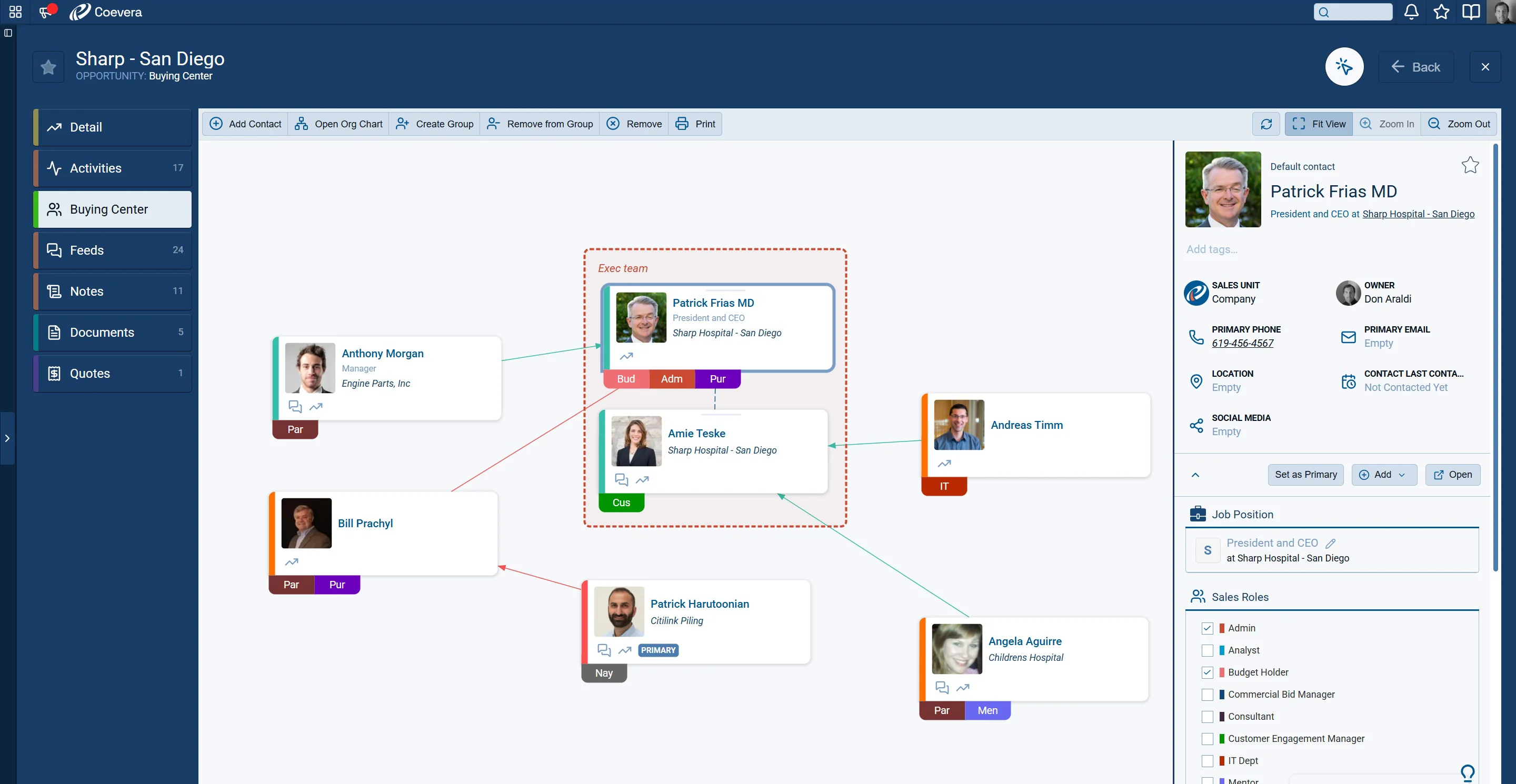
Let me be clear: this is not nostalgia, and it is not caution about technology. We should advance boldly. But we should deploy AI according to its true nature — as the most powerful instrument ever built for making dispersed, tacit knowledge visible and usable, rather than as a statistic that pretends to replace what it cannot contain. That is the wager Coevera is making. Not because it is comfortable, but because Hayek was right.
The stance this moment requires
Ludwig von Mises carried a single line of Virgil with him from his school days to the end of his life:
Tu ne cede malis, sed contra audentior ito. — Do not give in to evil, but proceed ever more boldly against it.
— Virgil, Aeneid VI; lifelong motto of Ludwig von Mises
That is the stance our industry needs now. If we do not contest it, AI will be deployed wrongly — as a substitute for the human being instead of an instrument in human hands. In the economic sense, that is the evil to which we must not yield.
In the next part of this series, I take up the second lens: the ethics of selling — why recommendation is the true currency of commerce, and why the salesperson is not a supplier of data but a creator of value.
Win Together.
— Nikolaus