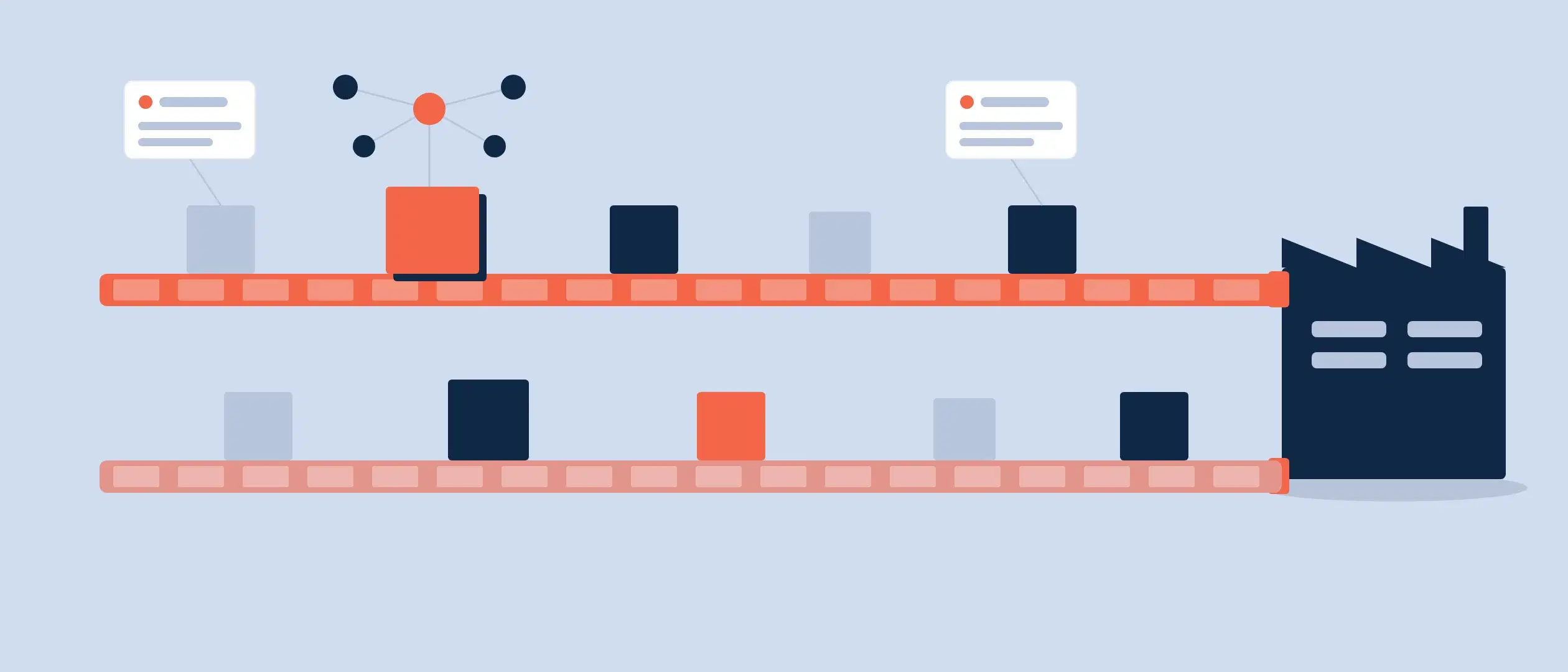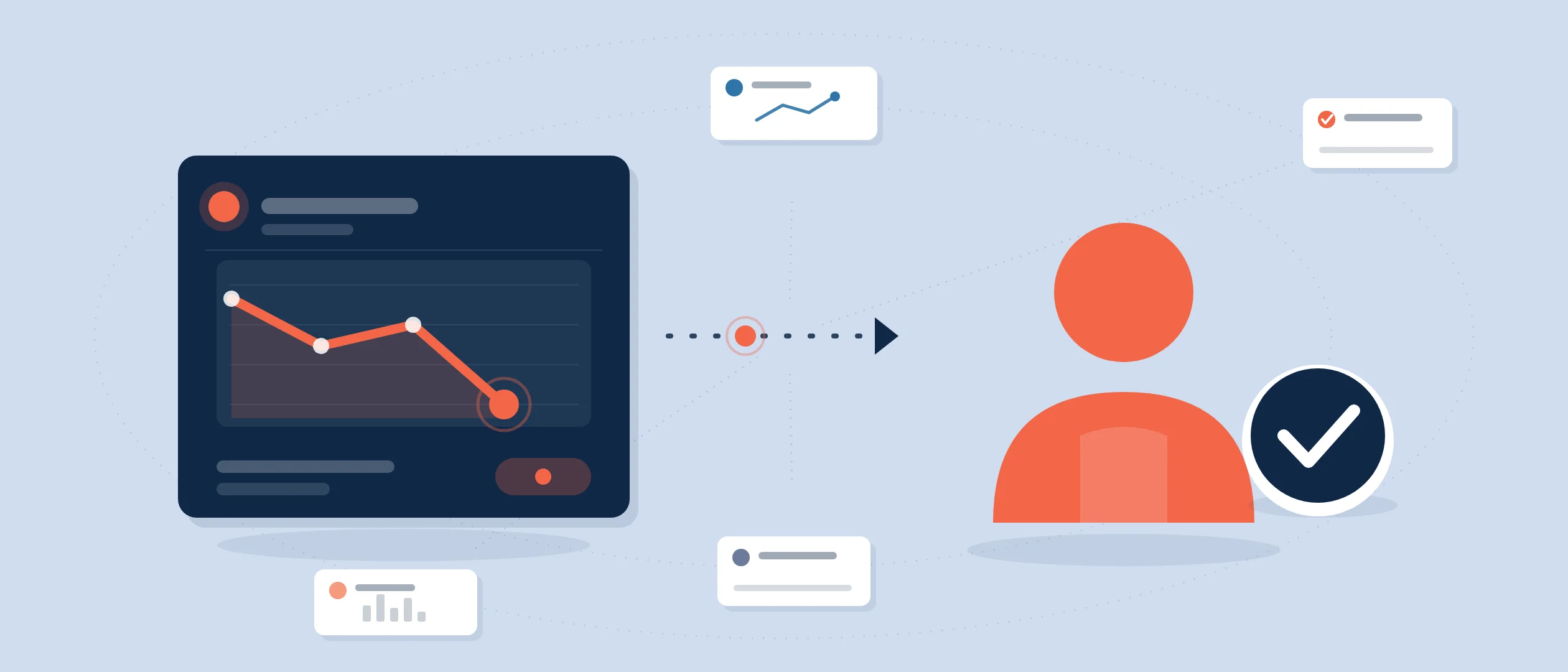
Every few months the sales-technology industry rediscovers the same seductive idea: feed a model enough pipeline data and it will tell you which deals will close, which customers are at risk, and what the rep should do next. The dream is a "headless" sales process, one where judgment is automated away and the human is left to execute. I think this beheads exactly the wrong thing. The future of AI CRM is not autonomous software that decides for your team. It is human-in-command AI that makes your team decide better.
The "headless" dream removes the wrong thing
The value of a salesperson was never the ability to update a record or follow a script. It is judgment under genuine uncertainty: reading what a buyer fears, remembering what was promised in a hallway conversation, sensing when "fair" means something different this quarter than it did last. Automate that judgment and you have not made the salesperson more powerful, you have removed the one thing that made the role worth having. Worse, you inherit the well-known failure mode of black-box AI in sales: recommendations no one can explain, trust that never forms, and a CRM the team quietly abandons.
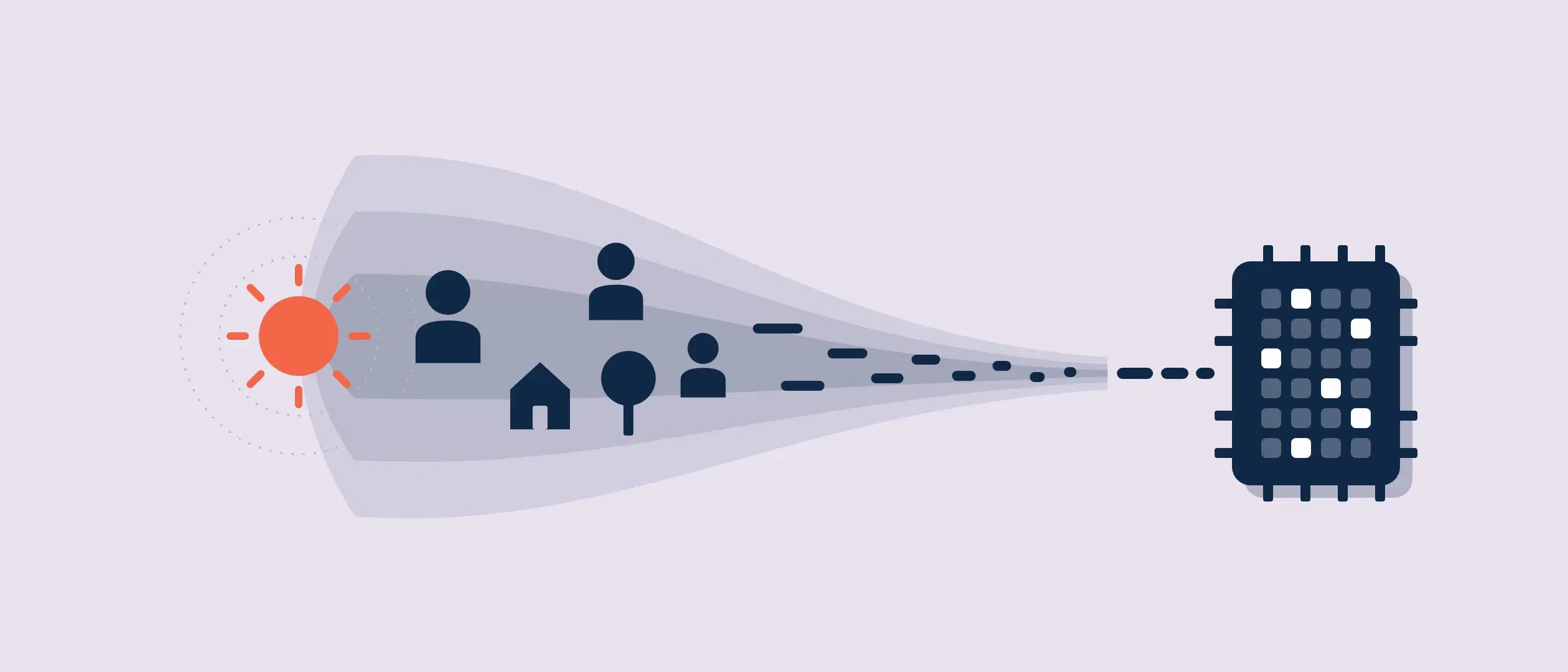
The same logic runs through forecasting. The strongest forecast is not the model's alone or the rep's alone; it comes from pairing machine scoring with human judgment. The model surfaces the pattern across many past deals, and the person supplies the context it cannot see: a verbal commit not yet in the system, a champion who just resigned. The lesson is not "trust the model" or "trust the rep." It is to design the relationship between them deliberately.
What human-in-command AI actually means
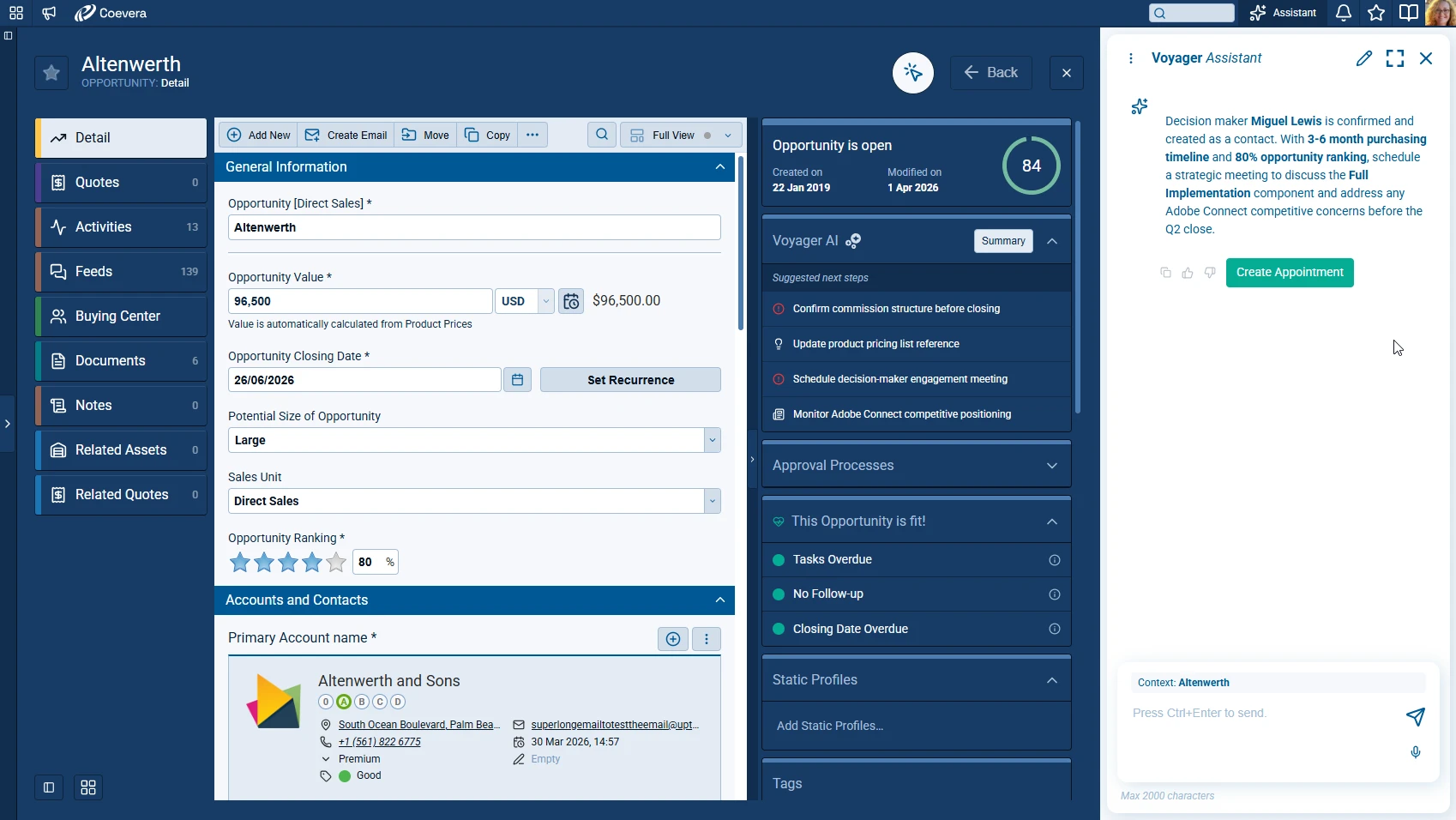
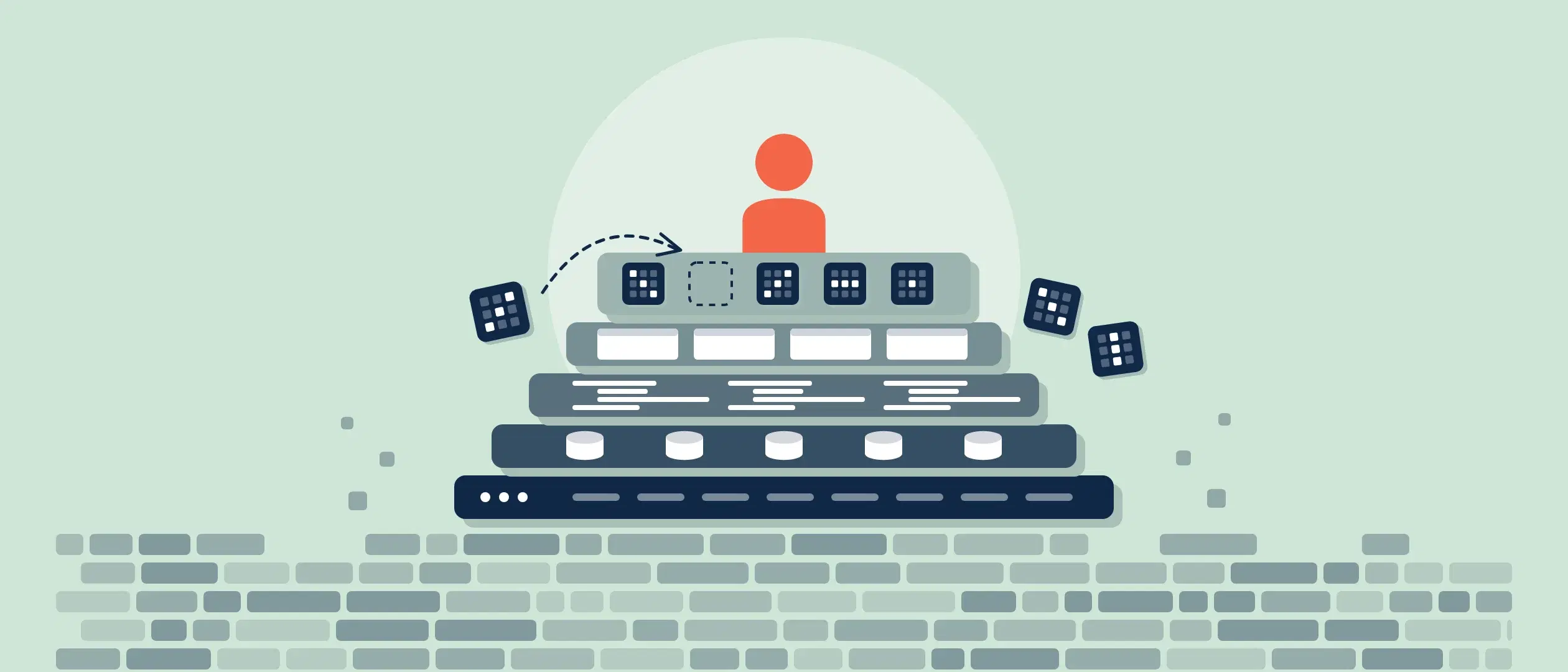
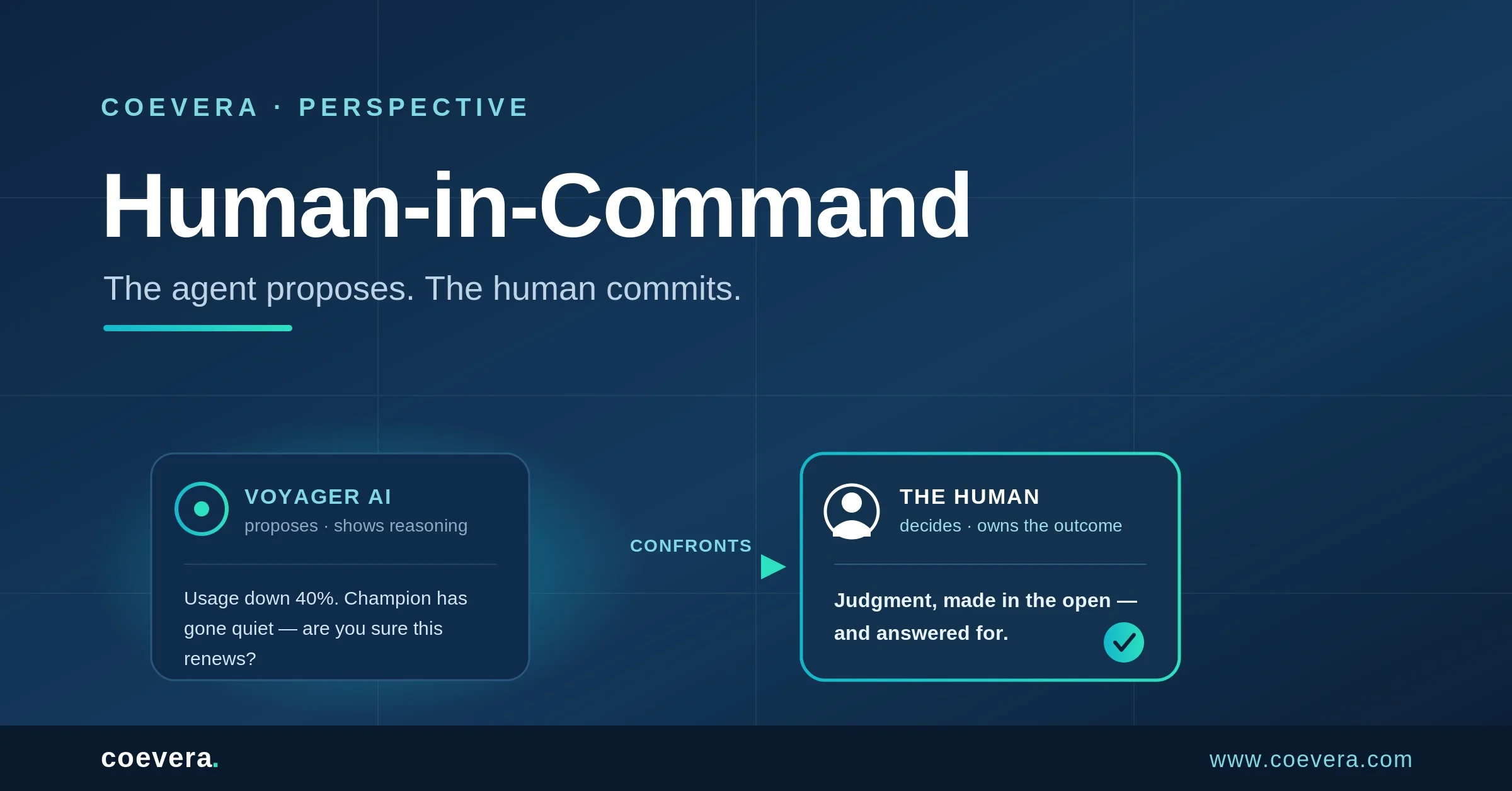
At Coevera the design principle is simple to say and hard to honor: the agent proposes, the human commits. Human-in-command does not mean a person rubber-stamps whatever the machine suggests. It means accountability for the decision never leaves the person. The AI's job is not to reach the verdict, it is to make reality visible and force a better conversation before the human decides.
This is a different role for AI than the one usually sold. Most "intelligent" CRM wants to be the judge, to score the deal, rank the rep, and hand down a number. We want AI to be the devil's advocate.
An AI that overrides is the central planner reborn. An AI that confronts is the honest colleague every professional needs.
Devil's advocate, not judge
Coevera's Voyager AI is built to contest a judgment with disconfirming evidence, not to overrule it: "Usage in this account is down 40 percent and your champion has gone quiet, are you sure this renews?" It shows its reasoning and asks before it acts. The rep still decides. This is the practical difference between explainable AI in sales and a black box: the human can see why the machine is worried, and can accept or reject it with their eyes open.
Override and confrontation do opposite things to human capability. Override replaces judgment; over time it atrophies. Confrontation sharpens judgment; over time it compounds. One produces operators who have forgotten how to think about their own accounts. The other produces professionals who think more clearly because something credible keeps pushing back.
Why accountability is a feature, not a burden
There is a quiet assumption in the headless dream that accountability is a cost to be engineered out. The opposite is true. A judgment no one has to answer for is a judgment that ultimately means nothing. Work done inside a black box offers neither autonomy nor mastery, because the person can no longer see the line between what they decided and what the machine decided for them.
Notice how the two fashionable models each strip out something essential:
- The headless model removes accountability by removing the human.
- The purely scored model removes accountability by removing judgment: the person is still there, but reduced to defending a number they never reasoned their way to.
The only design that keeps both is the one where the human stays in command and stays accountable: visible judgment, made by a named person, in front of the team, with the machine sharpening it rather than supplanting it.
What human-in-command looks like inside Coevera
In practice it means three things. Judgments (forecasts, health calls, close dates) are recorded and compared to what actually happened, so each person builds a personal track record of their own judgment over time. The pipeline is fully visual and shared, so a call becomes public to the team the moment it is made. And the AI is pointed at one task above all others: surfacing the evidence a confident human would rather not see.
That is what the name Coevera is meant to carry: collaboration and evolution, a new era in which human and machine work as partners, not the substitution of one by the other. The companies that win the AI era in sales will not be the ones that automated their salespeople out of the decision. They will be the ones that made their salespeople undeniably better at deciding, and left them standing: in command, answerable, and therefore worth trusting.
See AI that shows its reasoning
Voyager AI surfaces the evidence and asks before it acts, so you stay in command of every call.
Start a free trial