Digital transformation has particular meaning for today’s companies. It’s an environment in which an organization’s departments work together instead of existing in completely independent silos. Since it does encompass the whole company, digital transformation must be initiated at C-level and come from the top down.
I can provide an example of digital transformation’s implementation right within my own company. Well before the covid pandemic we closed offices that we didn’t need. We had long instituted technology that would keep the company productive no matter where in the world employees were located. Again, this wasn’t forced into place by the pandemic—we took this on and did it ourselves.
For Your Company, Too
The pandemic didn’t affect us at all in that regard—when it happened, no changes were needed. But I know many are still struggling and need to make that complete digital transformation. I’m out to help C-level management make that change with their organization because it’s extremely important.
Many had no choice but to change, forced by the pandemic. But there are still those who, unbelievably, are just waiting for things to “return to normal” (I really don’t think such a thing is going to happen) and counting on the old methods to get them through.
The Synthesis of People, Processes and Technology
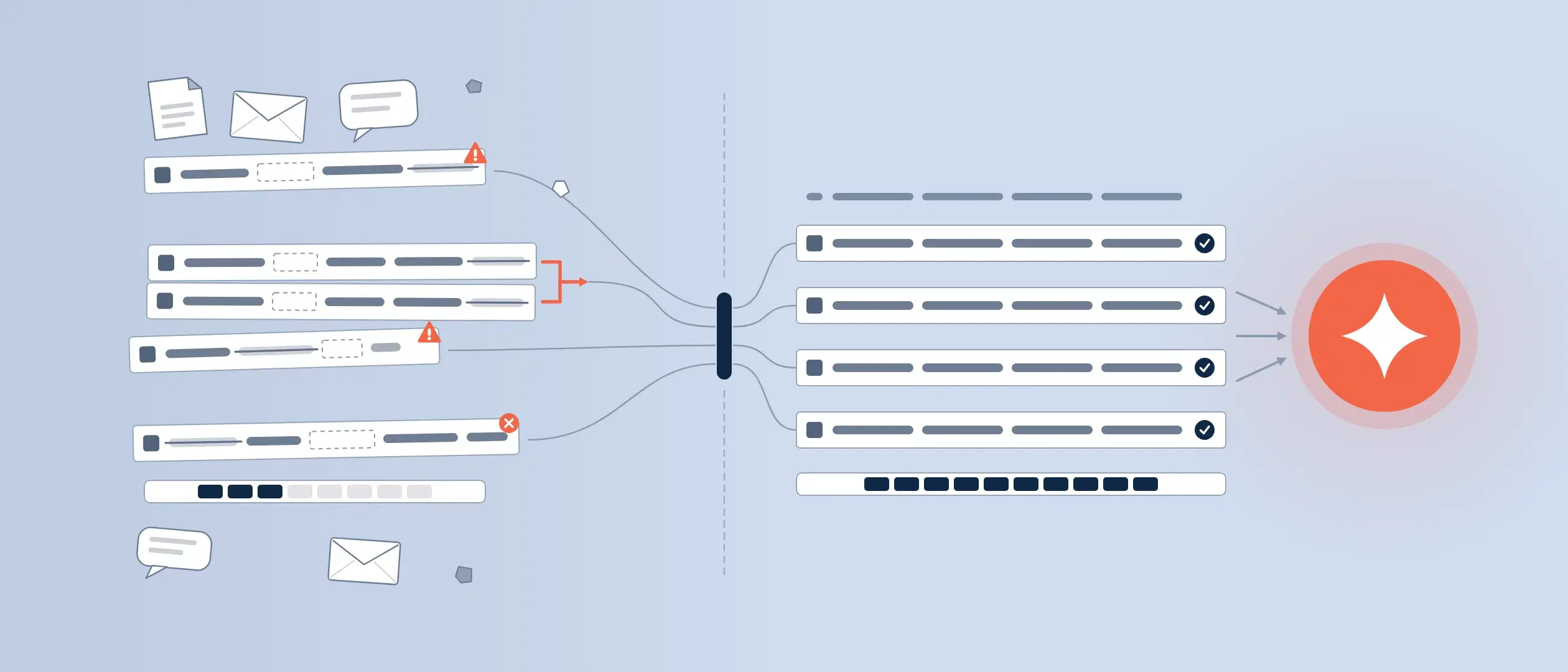
Digital transformation’s crux is an overlapping synthesis of people, processes and technology utilized in breaking down the walls of silos. Independent silos greatly slow down the digital transformation.
Company data actually doesn’t exist in silos, and must flow like a river throughout the company. That data is used to service the customer from any point in the organization, and the customer doesn’t care if that point is customer success, sales, support, accounts receivable or anywhere else. Customers hate being transferred from one place to another because “that’s someone else’s department.” You probably hate it, too—just remember the last time you had to phone up your bank.
Roles and functions are clearly defined within large organizations. This is a good thing, but it isn’t so good when it acts as a silo and the velocity of a process is slowed or halted. Documents, quotes, requests and other business items become stuck. Just look at the government—something can languish in a particular department for months.
Customers will no longer tolerate this stickiness—it is no longer acceptable. Customers demand instant service. Such service can only happen when people, processes and technology work harmoniously together to provide it.
Resistance to Change
To truly implement the digital transformation, resistance to change must be overcome. Change tends to provoke fear and anxiety in certain people, no matter what that change is offering. Some people tend to prefer the familiar, even when change will make their lives or businesses better.
One change tends to please even those most resistant to it, however, and that is the business model of the Cloud.
Services today are provided 24X7 which, for thousands of years, was not at all possible. During that time customers had no choice but to wait. Today businesses can’t afford to make customers wait—and in fact it’s almost a black-and-white choice: either they get the product or service right now, or they don’t get it at all.
Internet service is a fine example. If you’re working from home, and your internet goes down, you’re dead in the water. Technology today has made for very fast and robust internet, which in the old days didn’t exist.
Our lives, both personally and professionally, will continue to be changed by the Cloud. Businesses that refuse to move in this direction, and continue to resist change, will become extinct.
In practice: The author equates choosing a CRM with deciding where to put a factory, citing how Elon Musk moved his entire Tesla operation from California to Texas — arguing the CRM choice deserves the same depth of thought because it is a company's heart and central to digital transformation.
Operational Excellence
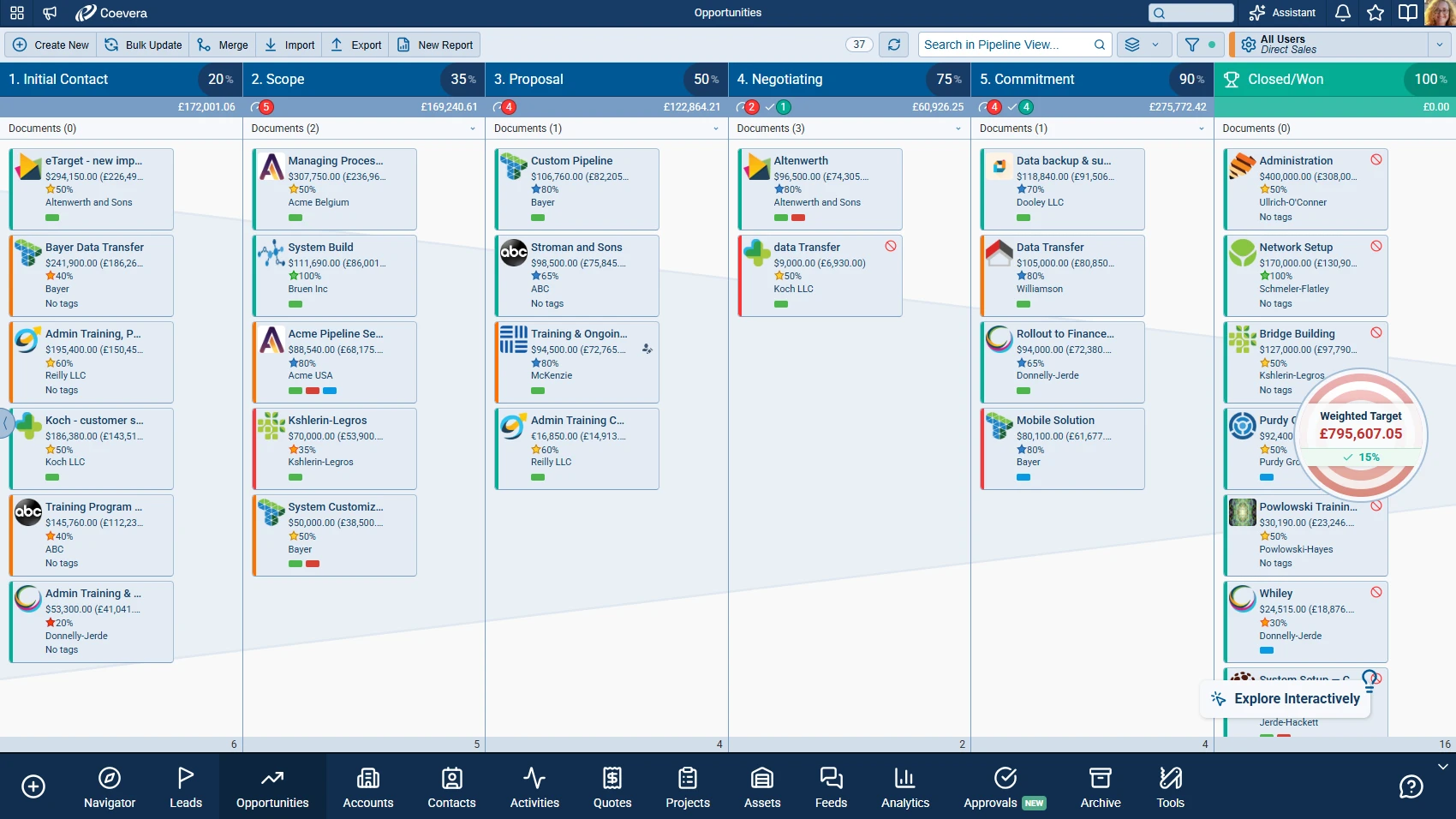
There is a requirement for getting digital processes up and running, and that is excellence in operation. With Coevera, we are assisting this operation right from the company’s core. That core is, of course, the CRM, and it needs to operate reliably across departments. In complex environments, the use of automated testing for enterprises helps confirm that changes or updates do not disrupt essential workflows. This makes it easier to detect issues before they spread through multiple processes. As a result, the CRM can continue to support daily operations without unnecessary interruptions. Why is CRM the heart of a business? Because business only exists for one reason: to service the customer.
It has always been important to service the customer, but today doing so takes top priority. This is because customer loyalty has radically changed over the years. In prior times, when someone drove a Mercedes, they would generally stick with that make for life. Now, someone might drive a Mercedes, switch to a BMW, and end up in a high-end Lexus. The only thing that will retain customer loyalty is customer experience—the best product, service, and price compared to others in the same category.
Requirement for Superior CRM
It is therefore vital for a company to consistently improve, innovate and optimize processes. Data is the heart of your business, and must freely flow through the organization to all the points where it is needed. That data is stored and mainly utilized in CRM, and must be used to provide the utmost in service to the customer. When you don’t have the best in technology—which of course includes CRM—how can you provide the best service to your customer?
We could make a comparison to another business aspect, that of location. To provide the best and most cost-effective service, you’re going to make a deep decision as to where your manufacturing facilities should be located. When he saw from a technical point of view that it was impossible to keep his Tesla facilities in California, Elon Musk moved his entire operation to Texas.
Equally important to the decision of company location is that of CRM, because it is factually a company’s heart, and central to an organization’s digital transformation into the Cloud. It is the only way to provide the best possible service to the customer.
Back to the Three
Taking a longer view, I stressed earlier that three overlapping categories make up the digital transformation: people, processes, and technology.
Focusing on processes, you should see that they are all about effectiveness and efficiency. It is effectiveness and efficiency that result in productivity. If processes aren’t correct, then you don’t achieve productivity. If you don’t achieve productivity, you don’t achieve profitability.
Tools are required for a process to be effective and efficient. In our case, those tools mean CRM. Without a powerful CRM system, processes don’t operate well.
Therefore processes are dependent on technology. In an example from another field, because I’m not a virologist, I must depend on scientists to figure out the best possible solution in dealing with covid (they’re not doing this at all, but that’s another matter). Similarly, processes must rely on the right technology, and people must depend on the right tools to utilize that technology. The importance of the right tools is evident everywhere—for example, you’d never use a sledgehammer to hammer tiny nails for hanging pictures. You’d cave in the wall.
All About the Customer
It’s obvious that today, everything revolves around customer service and retention. For a company to do that well, it must fully make that digital transformation.