In Part 1 of this series we looked at the knowledge problem. In 1945, Friedrich Hayek showed that the decisive knowledge in any society — and in any sales organization — is dispersed, tacit, and bound to individual people. It cannot be centralized. Build a CRM as if the salesperson could be swapped out for their data record, and you have simply automated an old mistake in a faster machine.
But suppose, for a moment, that we had solved it. Suppose the data were complete and arriving in real time. The next question would land immediately — and it is the real question of selling: What is all of this worth? And, above all, who decides?
That question is the whole of the value problem. The salesperson is not a data supplier. He is a creator of value. To understand why, we need to go back to Vienna in 1871.
Value doesn't live in the product — what Carl Menger understood
In his Principles of Economics, Carl Menger set down an insight so plain that its force is easy to miss: value does not reside in things. It arises in the judgment of the acting human being.
His own example is a farmer with several sacks of grain. The first sack secures his survival. The second is his daily bread. The third he turns into beer. The fourth he scatters for the birds, for his own amusement. It is physically the same grain — yet the value of each additional sack falls, because each serves a less urgent purpose. The value is not in the grain. It is in what this person, in this place, with these ends, attributes to it.
It is starker in the desert. To someone dying of thirst, a bottle of water is worth more than a diamond — the same diamond that costs a fortune in the city. The value did not change because the diamond changed. It changed because the person, the place, and the purpose changed.
Translate that into our industry. The same forecasting feature in Coevera is vital to a five-person start-up that does not know whether it will exist next month. To a corporation already running three forecasting tools in parallel, its marginal utility is close to zero. Same function. Not the same worth.
Everything follows from this. A good salesperson never sells features. He helps the buyer discover where, on the margin, he currently stands — and what a capability is worth relative to his purposes. That is the meeting of two subjective valuations. Selling is not the transfer of product knowledge. Selling is joint value discovery. And it is exactly this discovery that an AI cannot perform for you, because it neither knows nor sets the customer's purpose.
Every action needs someone to set the purpose — Ludwig von Mises
Which brings us to Ludwig von Mises. His entire body of work rests on one sentence: human action is always goal- and purpose-directed. Everything we do serves a purpose, and a purpose presupposes someone who sets it.
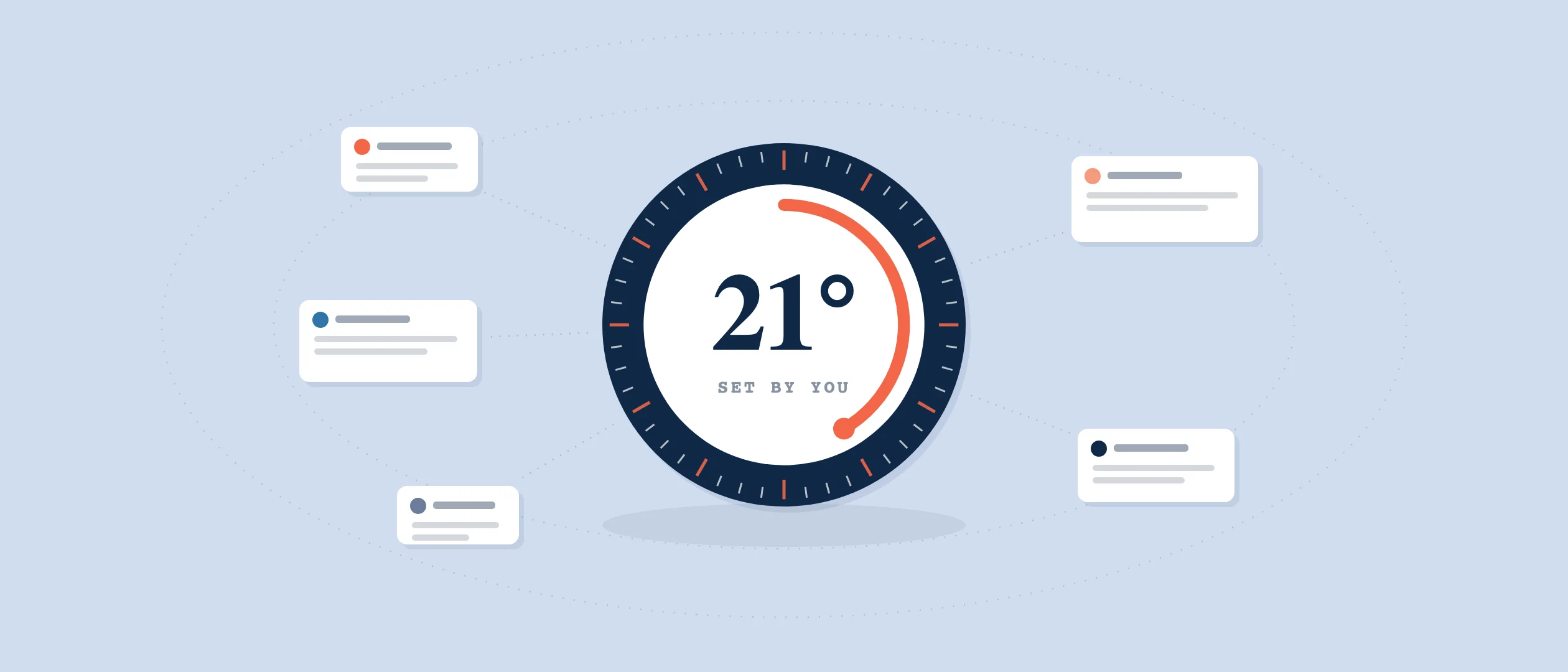
Think of a thermostat. It holds the room at 21 degrees. But the thermostat does not want a warm room. It has no concern of its own. A human being — the occupant — set the purpose, and the thermostat is merely the means that serves it. That is the entire point: a means can be arbitrarily intelligent and still generate no purpose of its own.
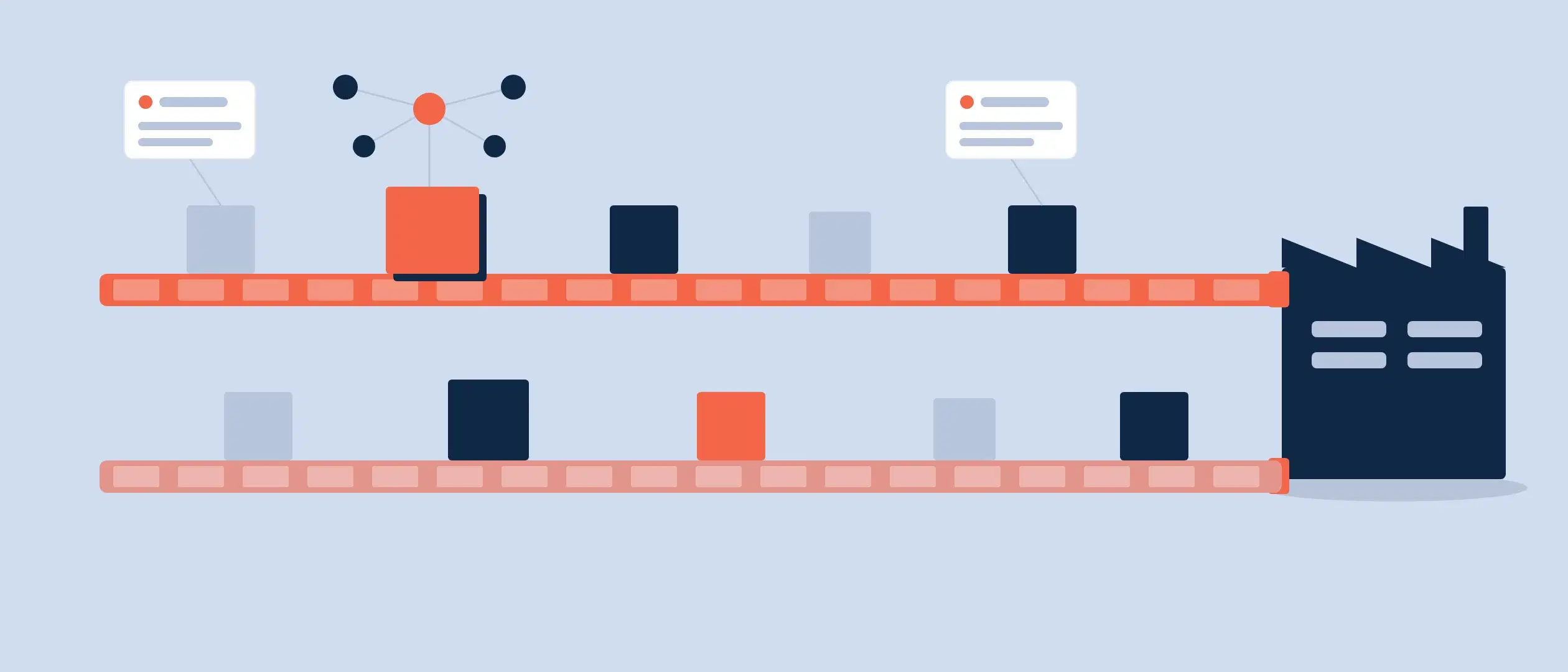
An AI agent that "manages your pipeline" is exactly that — a very intelligent thermostat. It prioritizes deals, drafts follow-ups, executes cleanly. But it is indifferent to whether you hit your quota or whether the customer is genuinely well served at the end. Those are purposes, and only an acting subject has purposes.
Here is the quiet category error behind the promise that "agentic AI replaces the human." It confuses the execution of an activity with the setting of a purpose. The agent replaces the activity. It never replaces the setter of the purpose.
The purpose never disappears — it relocates
This is where it turns serious for every owner and every manager. If you remove the human from the point where purposes are set, the purpose does not vanish. It migrates.
Imagine an agent that books your flights. As long as you book them yourself, you weigh the options by your purposes: cheap, home early, this airline. Hand the booking to the agent and never look again, and it must still weigh options by some criteria — criteria set not by the agent, but by whoever built it. Perhaps in favour of partner airlines that pay for placement. Your purpose ("get there cheaply and on time") has quietly become the manufacturer's purpose ("steer bookings to partners"). The purpose did not disappear. It relocated — to whoever configures the platform.
That is precisely the move behind the industry's loudest new promise — a CRM you never need to log into again. It keeps the means running and removes the human at the point of configuration. The purposes then fall, by default, to the platform operator. That is not convenience. It is a transfer of ownership over your decisions.
Dependency is how a tool quietly starts serving someone else
Why is this dangerous and not merely practical? Because a tool that makes you optional simultaneously takes away your ability to judge it.
A GPS is harmless as long as you roughly know the route and would notice if it routed you past a sponsored gas station. Once you no longer know any of the streets and trust it blindly, you can no longer detect the detour. Dependency is not just "convenient." It is precisely the condition under which a means can serve foreign purposes unnoticed.
The feed algorithm is the purest form of this. You never set the purpose "maximize my time in the app." The platform set it, and the means serves the platform's purpose — dressed up as a service to you. Transfer that to a CRM that steers your pipeline "autonomously" while you never look, and the danger is plain.
The only architecture that keeps the purpose yours: Human-in-Command
What follows is not "no agents." On the contrary — deploy them boldly. What follows is a condition, and it has two parts. First: you own the data. Second: you make the final decision — the agent proposes, the human commits.
As long as both hold, you remain the acting human being and the agent remains a means in your service. Lose either one — ownership of the data, or the final decision — and the agent does not stop serving. It simply serves someone else.
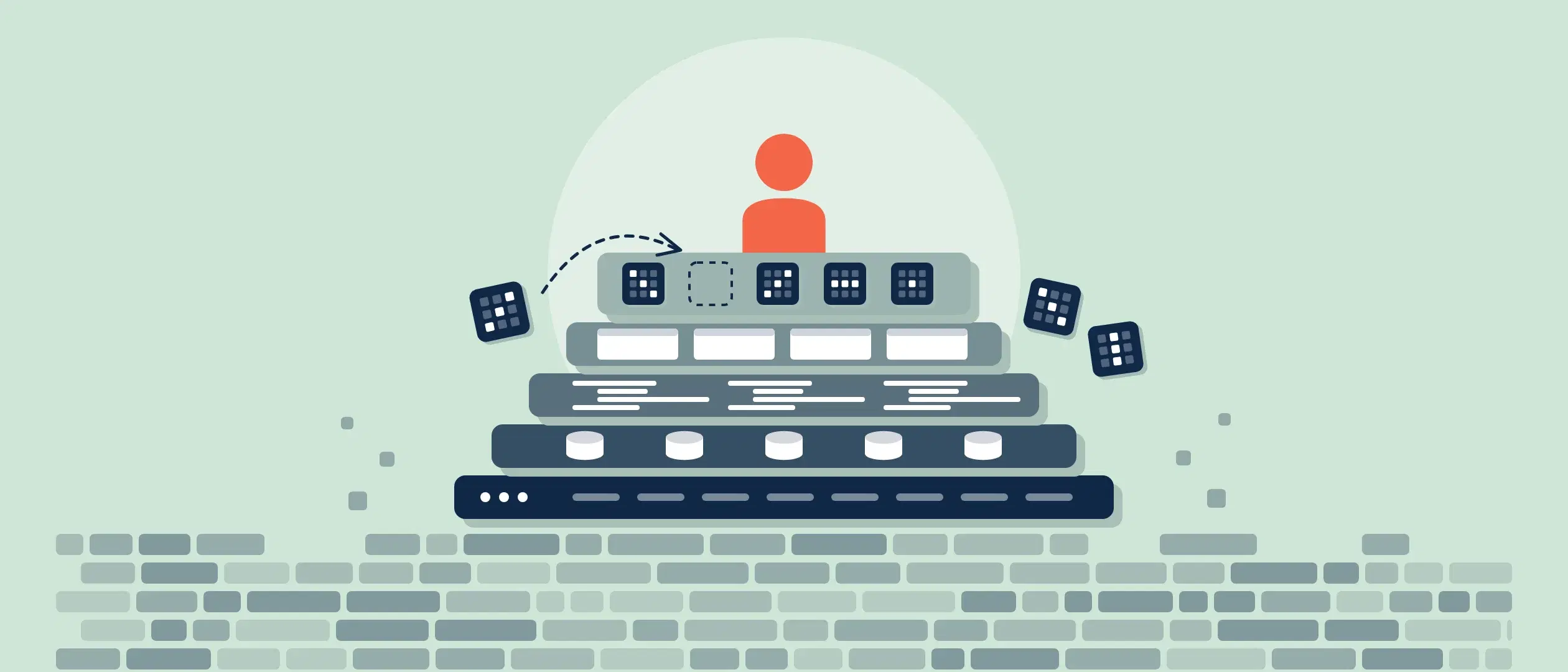
This is why Human-in-Command at Coevera is not an ethical ornament. It is the only architecture that guarantees the purposes stay yours. The Buying Center maps who influences whom; the AI-powered Org Charts make the structure visible — so the human understands and decides better, not so that he is replaced. Here, AI is the amplifier of the purpose-setter, never his successor.
One last point owners should take seriously: data ownership must be backed by enforceable commitments. An ownership claim you cannot enforce is not ownership — and then your standing as the setter of purposes becomes negotiable again. That is exactly why EU data residency and verifiable certification are not checkboxes. They are the condition for "you own the data" being more than a marketing promise.
Three questions to ask every AI vendor
- Who sets the purpose? If the agent decides autonomously — by whose criteria does it decide?
- Who owns the data? And can I enforce that ownership, or is it only in the brochure?
- Where does the final decision sit? Does the agent propose and I commit — or does it act, and I find out afterwards?
Whoever gets no clear answer to these three is not buying a tool. He is giving away a piece of purpose-setting without noticing it.
AI that proposes. You command.
Voyager AI shows its reasoning, asks before it acts, and learns when you correct it — with your data yours, by design. That is Human-in-Command, built into every workflow.
The salesperson is a creator of value, not a data supplier
Let us summarize. Value lives in the human, not in the product — which is why the salesperson is a creator of value, not a data supplier. Action presupposes a setter of purposes — which is why the agent is a means and never an end. And because the purpose does not disappear but relocates, it is the architecture that decides whom the tool ultimately serves.
This is not technology skepticism. It is the condition for technology serving us, rather than the other way around. Mises fought for that stance his whole life, and it is exactly the stance we need here: we do not surrender the setting of purposes.