Of what does a truly robust CRM consist, and how should it really operate? Looking forward into an ever-evolving technological future, it is clear that a CRM solution is vital as the virtual engine of an enterprise, the heartbeat of your business.
CRM Versus Platform
Numerous CRM solutions today are labeled “platforms,” which are in fact collections of applications from the same vendor. However, one thing that a truly robust CRM is not is a platform.
For these platforms, vendors make claims that they could never meet, such as “increase your sales by X percent” and “get more qualified leads.” No piece of technology could stand up to a promise of increasing sales, including ours (we make no such claim). If it is worth its name, a CRM empowers sales teams to increase sales, but it could never increase leads or sales by itself.
Since a single platform is a collection of applications (some contain over 50), these platforms are attempting to be “everything for everyone” with applications for every possible need. One vendor makes a claim, “One app to replace them all.” This is not even possible, because no vendor can be an expert in all applications. This is why we have taken the “best of breed” approach, which I’ll discuss further on.
The Business Engine
The Platform approach is not taken by Coevera. Instead, Coevera is solely and only the company’s engine, and that’s what we’re experts in. This is much like Porsche’s 3.5-liter engine, one of the best car engines in the world. Porsche took 60 years to perfect this engine, and it’s still undergoing innovation. While we haven’t been around for 60 years (no CRM can make that claim), we, too, took years to perfect. Coevera has been under consistent development for over a decade.
It is because of CRM’s importance to business that we have taken this approach. It’s an absolute truth that no company today can survive without a CRM—period. It’s similar to another application that a company cannot live without today, a complete bookkeeping application. In today’s lightning speed of commerce, no company can keep close enough accurate track of its transactions without such a bookkeeping application. At the end of the year, such an application can interface with the IRS for precise tax reporting.
It is due to the importance of CRM to an enterprise that we have invested all our resources into the development of a single CRM that is, like the Porsche 3.5-liter engine, as close to perfect as possible.
It’s true that the Porsche 3.5-liter engine, while an engineering marvel, is not appropriate for every car. You’d never, for example, put one into a Volkswagen Bug. Similarly, Coevera is not a fit for every business—it is made for businesses with a dedicated B2B sales process, for midsize and larger companies that need a sales manager with a dedicated sales team. And, like Porsche, we do it better than anyone else in our market.
Integration With Other Applications
As taken up above, “platform” CRM systems are trying to be everything to everyone. It would be like a car engine manufacturer also manufacturing the navigation, air conditioner, and sound system.
Instead, motor vehicle manufacturers take a “best-of-breed” approach. For example, Porsche installs Burmester’s high-end audio systems. Other car manufacturers, such as Lexus, utilize Bose systems. A car manufacturer has never put the serious research and development into sound systems that these others have—why try?
We take, at Coevera, this very same approach, connecting to “best-of-breed” applications. Coevera integrates with over 50 of a company’s most-used tried-and-true applications. We also provide two APIs so companies can integrate with their legacy applications where needed. We’re most definitely not out to reinvent the wheel.
Replacement of Humans?
There’s another apparent goal for CRM technology, and that is artificial intelligence replacement of humans. In the last few years, we have seen articles predicting that the salesperson would be extinct one day, replaced by such technology.
It’s great fun watching artificial intelligence replace humanity in fictional scenarios through television series and movies. We don’t, however, believe this can ever occur in sales—at least, in complex B2B sales, which is Coevera’s marketplace. AI might eventually be able to track a sale with one buyer or prospect, but in B2B, several stakeholders are often involved. For example, I was just in a meeting with one of my sales reps and three representatives from the potential buyer. AI could not possibly have kept track of all five streams of thought and consideration.
We warn companies shopping for a CRM to investigate wild claims made for AI in CRM before investing considerable time and money into them. It is a dead-end.
For one particular function—support of a salesperson—AI is quite worthy. Our Voyager AI functionality, included in Coevera, was developed for this purpose, and in this regard it is extremely effective.
The replacement of human responsibility seems to be another goal for AI. We take the exact opposite approach and put humans in control. Not only do salespeople have their own responsibility, we provide them with the same responsibility as their sales managers. Unlike many other CRMs, Coevera does not hide data from salespeople—salespeople see the same data as their managers.
In practice: Rather than keep licensing an outside calendar tool, Coevera built appointment scheduling directly into the CRM so it combines seamlessly with workflow automation — the author says the result is more efficient than Calendly, the app it had previously been paying to use.
The Empowerment of Salespeople
Because a salesperson’s job is not like any other within an enterprise, we focus on empowering salespeople. A salesperson’s pay is dependent on the quantity sold. Other types of employees are paid by the hour or by the week, but rarely by production. Only a few jobs have such a risk factor.
Only entrepreneurs are willing to take such risks, and it is for that reason that I have pointed out for many years how salespeople have entrepreneurial qualities. I call salespeople “entrepreneurs within the enterprise”—or a word that I coined, “salespreneurs.” Coevera is designed to support every aspect of sales, reducing the risk factor as far as possible.
Another reason we believe that technology will never replace human salespeople is that sales has a requirement of well-rounded education and understanding. A salesperson must understand how to read people, must learn how to interact with people, and learn to talk with them in a very different way. They must learn strategic skills.
Such skills should be supported by technology—which is exactly what Coevera does. Technology takes the place of repetitive and routine tasks so that the salesperson can concentrate on importances.
An example of technology we have created for salesperson support is our appointment scheduler. Before its development, we utilized another calendar app from another company, paying to license this technology. Because salespeople are constantly making appointments, we realized that it made much more sense for us to program appointment scheduling into CRM so that it could seamlessly combine with workflow automation. In doing so, we created functionality far more efficient than Calendly, the app we had been employing.
Salespeople should have a precise focus of attention. A salesperson—and a sales team—is there to win customers, to be competitive and create value. That value is different for every industry and even for various products and services, which is another reason technology could never replace human salespeople. Coevera makes it possible to create value in any industry, based on human judgment.
Coevera’s Technical Superiority
Rather than utilizing algorithms, the opportunity navigation within Coevera takes a heuristic approach.
Built right into traditional CRM systems are “decisions” of what direction a salesperson should go and what strategies they should take. These are then programmed into the CRM as known objectives, through algorithms. Coevera doesn’t try to use algorithms for navigation but takes the heuristic approach, as it is far more effective.
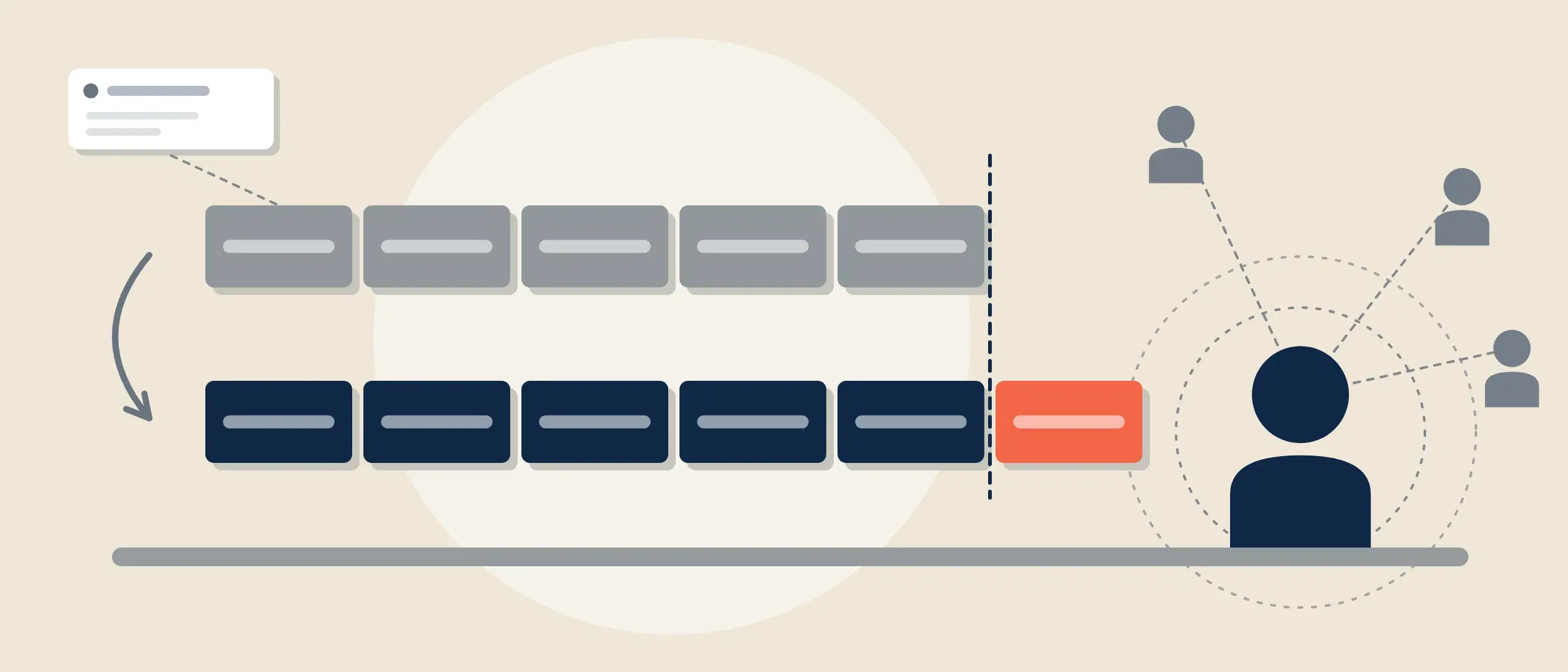
Development of a relationship would be an example of a sales heuristic approach. If a prospect responds to a salesperson’s email, the salesperson will take the next activity within the process, or the next step in the sales process. If there is no response from the prospect, the salesperson takes a different action. Each step is based on the previous step and ultimately results in a strengthening of the relationship.
An understanding that the world is radically changing underlies Coevera’s technical superiority. For that reason, over the last several years, we have released new functionality every single month—more frequently than any other vendor in our space. We do this because we aim to deliver the best possible tool for the sales manager and sales force, so they can keep up with today’s digital transformation.
Salespeople will never be replaced by Coevera. We will always create technology for the sales team to make their lives easier, but never replace them.
Sales Moving Into the Future
The Future of Sales
A very bright future lies ahead for intelligent salespeople who adhere to our theory that they are the wealth creators and peace producers of our society.
What does that mean? We’re residing and working within a networked society, the currency of which is recommendations. Therefore a salesperson’s reputation is everything. When they have created that reputation through intelligent sales and have provided real value for their customers, they will never be replaced by technology or anything else. They will be indispensable to their companies and even to society.
In this series of articles, we’ll further dive into our approach, and elaborate on why it’s the most reasonable, effective and efficient compared to our competitors. We’ll explore how Coevera is the only system that takes the real challenges of the sales team seriously, because we are laser-focused on the real problems that salespeople encounter from beginning to end.
Stay with us!