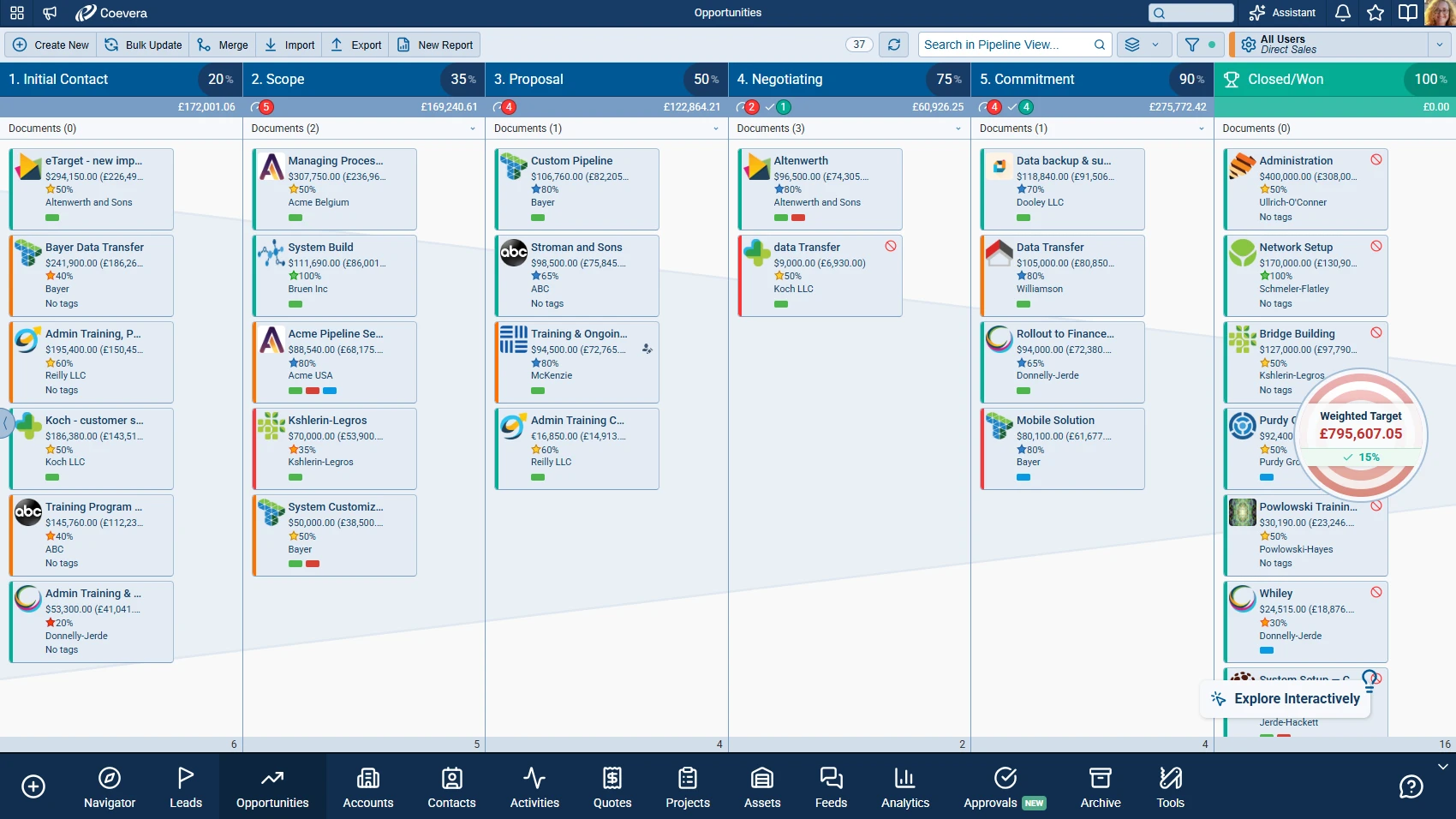
You can clearly see from my previous two articles—The Fundamental Error of Approach in Today’s Sales and Theory and Practice of Coevera—that Coevera is the total opposite of a mechanical application, with a distinct theory and purpose behind it.
The impetus behind Coevera’s creation was the great societal transformation we are currently in the middle of, that some cannot keep pace with. Technological innovations such as smartphones and various computing devices seem to pass right on by, for example, older people who aren’t willing to follow.
It is apparent, then, that we have a demographic challenge. But we also have an educational challenge to bring everyone up to speed. Overcoming these challenges was the original vision for Coevera.
Creating a Present-Day Culture
How can Coevera help to overcome these challenges? As we’ll demonstrate within this article, these challenges are only overcome with changes in the culture. The vast majority of the population spends most of their waking hours working within a company, and therefore the corporate structure is where culture is actually created.
According to renowned Austrian economist, “Culture eats strategy for breakfast.” That means culture will always dominate, no matter the strategy. It’s the culture that must change if we are to overcome the barriers and challenges to this technological transformation.
There is an unfortunate characteristic accompanying the fact that culture is created within companies: many enterprises are still working within a pre-digital transformation approach. I would even go so far as to say that some company cultures are deeply rooted in the last century. They have not really noticed that the world has changed, operating with a very hierarchical approach, not empowering those lower down in the structure.
Salespeople and Social Empowerment
These factors have not gone unnoticed by us, and so Coevera has been designed to empower salespeople in creating the new culture. The idea is to raise them to be self-motivated, instead of being “driven” from above.
Salespeople, we believe, are the ones to lead the way in the creation of a better society—through and beyond the new transformation. Therefore I created the definition, “Salespeople are wealth creators and peace producers.”
Just exactly how is wealth created by salespeople? They create value for the buyer. They also create value for themselves, as they get paid for what they provide. Wealth creation is vital to society, as it strengthens the middle class. They become happy and content. The economy is strengthened as people purchase goods and travel.
How is peace created by salespeople? When two or more parties are engaged in commerce, they can never be in conflict or at war. In that salespeople are the main instruments of commerce, they are truly the peace producers. Without peace, we are in distress, constantly worried, and constantly fighting. Peace gives us time to build our homes, families, and relationships.
Internalizing Motivation
The majority of CRM systems and CRM platforms aim to “motivate” a salesperson from the outside. It’s like having an outboard engine on a boat—the engine is external to the salesperson. They keep having to gas it up with “motivation” and drive. What happens a few weeks down the road? They have to gas up again.
Conversely, Coevera internalizes motivation, getting that “engine” running from the inside. A salesperson already has the power to motivate themselves—they just have to take responsibility to do so.
Our SalesPOP! multi-media online site, embedded within Coevera and also available free of charge online to anyone, further assists this motivation. It contains advice and knowledge from thousands of experts to help salespeople and leaders attain their goals.
By the numbers: The author notes that almost a third of the population works in sales, which is why Coevera targets that group specifically — by empowering salespeople to become self-motivated wealth creators and peace producers, the aim is to shift society for the better, person by person.
Creativity in Everyone
It may be true that some people are more creative than others. However, on some level each human being is capable of being a creator and a decision-maker.
This can be easily seen on an everyday basis. Hundreds of years back, a person would go to a tailor or dressmaker to have their clothes made to precisely suit them. Then came the Industrial Revolution, and clothing was mass-produced, no longer customized for the wearer. But despite that, with billions of people purchasing ready-made clothing, you’ll never see two people wearing the exact same thing. They customize with different shoes, T-shirts, chains, hats or other accessories. There’s always at least a slight difference from the next person.
Another example of everyday creation is in home decor. For 30 years, Swedish furniture seller IKEA has had stores in the U.S. The same items are available to everyone seeking to cost-effectively furnish their homes. Yet you will not find two home interiors, even if they both utilize IKEA furniture, that are the same.
It is obvious, then, that creativity runs freely throughout our attire and interior decoration. But that creativity seems to be left behind when people enter their workplaces. There are many books on how to activate creativity in workers. The question, though, isn’t how to motivate someone to be creative—people are all creative. So why aren’t people creative in their working roles?
There are those who, outside of their regular employment, work within non-profit organizations, and can be highly creative within them when they’re not even being paid. But when these people come to work, that creativity seems to shut off.
Some theories say that lack of workplace creativity comes about because employees have no real purpose in working for a company. Outside the company, they have purposes for their home, their dress and other pursuits, but not within the organization. Many seem to think that working is a “necessary evil” to earn money—they’re not practicing any creativity that can bring more value. That is why motivation must come from within, not be constantly “created” from the outside, as we covered above.
We’re not attempting, with Coevera, to arouse creativity in all people. But how many can we reach and motivate? Almost a third of the population works in sales—so Coevera is reaching out to them particularly. That’s a healthy number, and Coevera can have a considerable impact by empowering salespeople to fully take their own action, assume responsibility for their freedom and become wealth creators and peace producers. And society starts changing, bit by bit, for the better.
Salespeople, if they are to go down this path, must create deals that are “win-win” for both the buyer and themselves. If they betray someone they are supposed to be servicing, they end up torpedoing the very system that they’re supposed to be bringing to life, and that supports them, too. I have created a saying that the “perfect deal” should hurt each party—the buyer and the seller—just a little bit. That means it’s fair. That’s also how you know you will always be at peace, because the salesperson is creating a condition where they lose a little and the buyer loses a little. No one is taking unfair advantage.
Our Specific Aim
We’re aiming straight at the above-stated purposes and goals. It’s why we spent so many years creating Coevera. The underlying theory was not created by me alone—the ideas are deeply rooted in hundreds of years of the powerful tradition of the Austrian School of Economics, of psychology (particularly that of Viktor Frankl) and the principles of Cybernetics evolved at MIT.
That’s what dictates our direction!
Start Your Free, No-Obligation 14-Day Coevera Cloud Unlimited Trial.