Throughout my career, the most successful salespeople I have known have shared a quality that nobody could quite articulate. Call it instinct, presence or a read on the room. They would walk out of a meeting and say, 'We're going to win this one,' or 'Something's off here,' and they were usually right, long before the CRM system could confirm it.
Emotion and feeling are not the same
We used to treat that as a gift. It is not. It is a skill. And we are finally able to explain where it comes from.
In everyday speech, we use the words 'emotion' and 'feeling' interchangeably, but in fact they are not the same thing. However, in neuroscience, as demonstrated by Antonio Damasio's work, they are two distinct concepts.
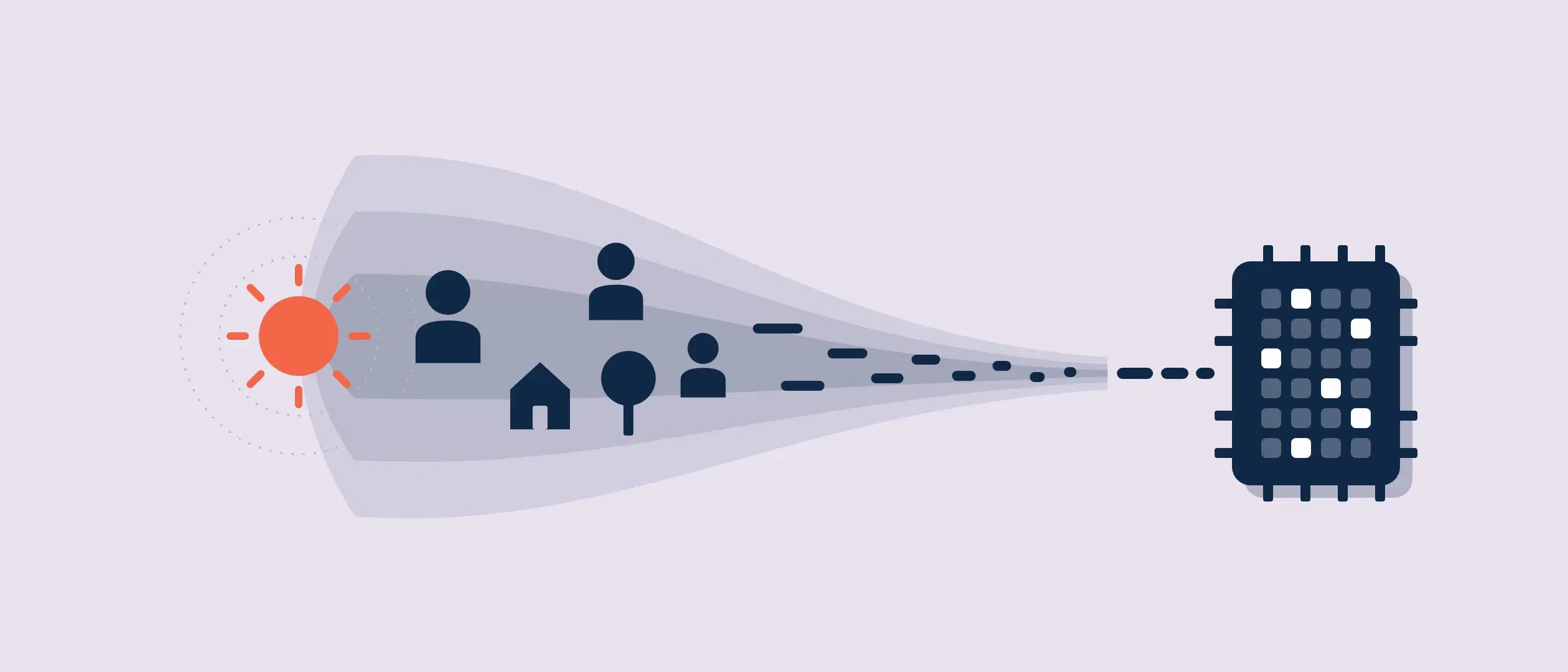
An emotion is the body's automatic, pre-conscious reaction, such as an increased heart rate, a change in posture or a micro-expression that appears before a single conscious thought has formed. It is fast, evolutionarily old, physical and measurable.
A feeling is what happens a moment later when the brain interprets that bodily signal and turns it into a conscious state. 'I sense trust. Something is wrong here. I want this.'
Emotions live in the body. Feelings live in awareness. Every feeling has an underlying emotion — but not every emotion rises to the level of a feeling that we can name.
What this changes in a sales conversation
Once you accept this distinction, a sales conversation looks completely different.
The buyer makes a decision in the body and emotionally in seconds, then rationalizes it afterwards. Tone, pace and confidence trigger a response long before the prospect can articulate how they feel. The ROI slide, the feature comparison and the reference customer are all brought in afterwards to justify a decision that has already been made by the body. This is why the technically superior offer so often loses to the emotionally stronger one.
The process runs in reverse for the seller. That 'gut feeling' after a call is not mysticism. It is compressed pattern recognition — an emotion that the seller has registered, but not yet decoded into a feeling.
The Austrians saw it first
The Austrians were a century ahead in this respect. Long before affective neuroscience had the instruments, the Austrian School of Economics had the insight.
Founding the school in Vienna in the 1870s, Carl Menger broke with the idea that value is an objective property of a thing, sitting in its cost, its materials or its labour. Value, Menger argued, is subjective. It exists only in the mind of an individual, in relation to that person's wants at a given moment. Two people facing the same product will place different values on it, and neither person is "wrong".
In economic terms, this is precisely what Damasio describes in neurological terms. Value is not in the spreadsheet. It is in the buyer. It is felt before it is reasoned.
Ludwig von Mises took this idea further. He wrote that human action is purposeful behaviour aimed at removing a felt unease — moving from a less satisfactory state to a more satisfactory one. Read that again from a sales perspective: every purchase is an attempt to alleviate a perceived discomfort. The seller's job is not to create that unease. Rather, it is to understand it and help the buyer act on it effectively.
Friedrich Hayek gives the salesperson's superpower a name. Hayek's central idea was that the most important knowledge in an economy is not the kind you find in textbooks. Rather, it is dispersed, local and tacit — 'the knowledge of the particular circumstances of time and place' — held by the person actually in the situation, and often impossible to write down. Sellers have an instinctive understanding of specific buyers, rooms and moments that no dashboard could ever contain.
AI can now read the emotional layer
For a long time, this was the clear dividing line in our industry. The machine handles the explicit, and the human owns the tacit. The data layer belongs to software, and the emotional layer belongs to people.
But that line has just moved. AI can now read the emotional layer.
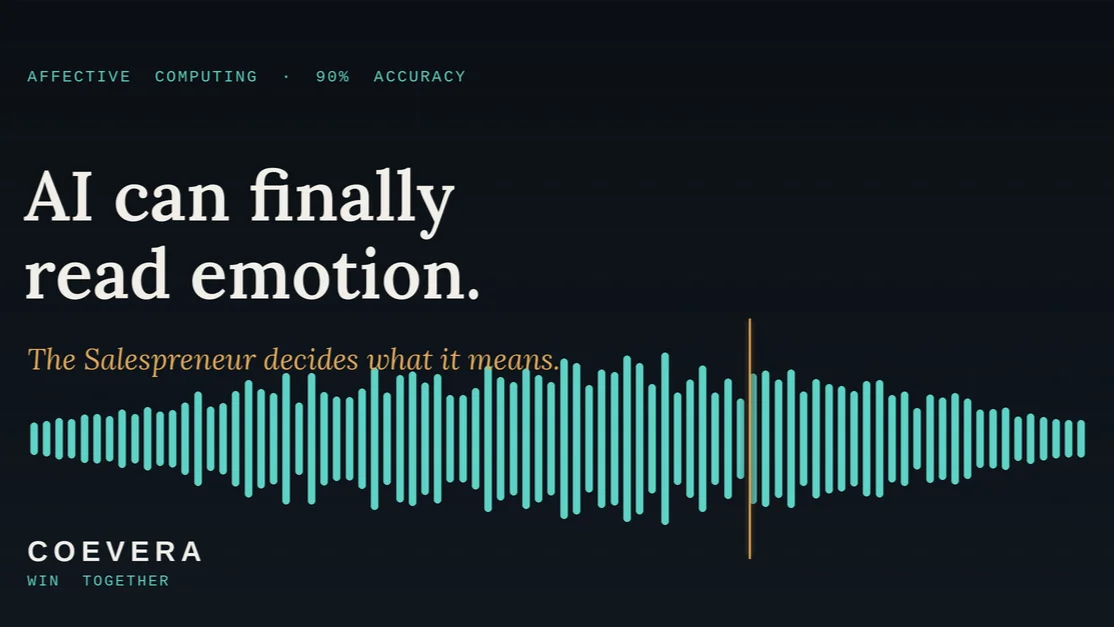
Affective computing has left the laboratory. Modern language models can label emotions in text with an accuracy of around 70–79%. Multimodal systems, which combine facial analysis, vocal pitch and cadence, and physiological signals, can achieve an accuracy rate of around 89–90%. The Emotion AI market is expected to be worth around six billion dollars by 2026, growing at a rate of about 27% per year. It is already standard infrastructure in contact center and customer experience platforms.
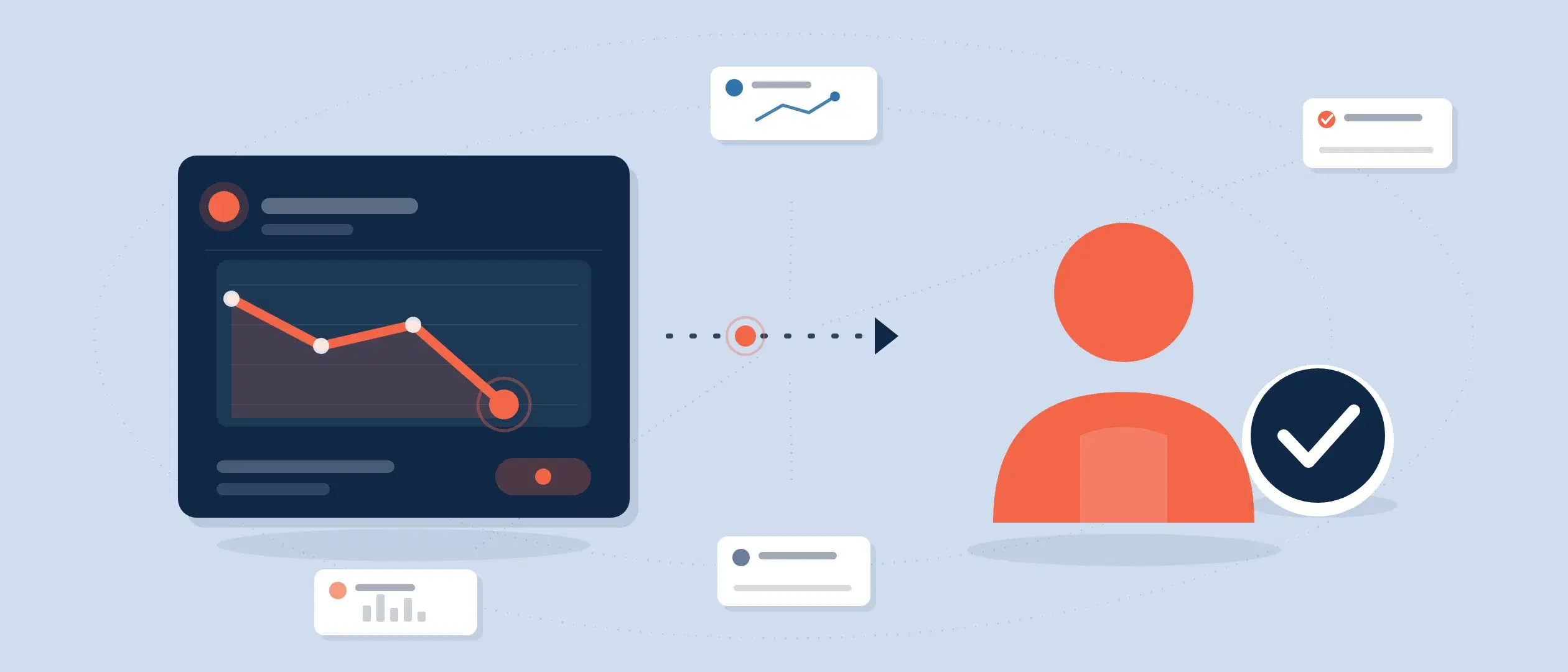
Put simply, an AI can now perform tasks that belonged solely to the seller a year ago. It can identify when a prospect sounds disengaged. It can confirm that a buyer's voice tightens the moment the topic of price is raised. It can detect when the tempo of a call drops, or notice when a written reply conveys frustration that the representative missed entirely.
AI is no longer blind to the emotional layer. It operates there too — imperfectly, but well enough to transform the role. So the honest question is no longer 'Can AI see emotion?' It is "What can sellers do that AI still cannot?"
AI detects emotion; humans decide what it means
While AI can detect certain things, it is up to the salesperson to decide how to act on this information.
The old positioning — 'AI sees data, humans see emotion' — is no longer true, and any vendor still selling it will lose credibility within a single sales cycle. A more accurate and enduring position is this:
AI detects emotion. Humans decide what it means and how to act on it.
— Nikolaus Kimla
Co-evolution is a process in which each party improves at the other's job. An AI can tell you that a buyer hesitated. However, it cannot tell you why this particular person hesitated in the context of their year, budget cycle or last disappointing experience with a vendor. It lacks the relational history that gives a single signal its real weight, such as "she always sounds like that right before she says yes". It cannot earn trust as a moral agent. A flag from a model is information, whereas an acknowledgement from a human being is a relationship event. Furthermore, it cannot make an ethical decision about whether to act on a detected emotion.
This is why, at Coevera, we treat emotion detection as an assistant, never an authority — a hypothesis that the Salespreneur confirms or rejects, with the system learning from the human rather than the other way around. This is why we handle emotion data as the sensitive personal data it is, with consent and transparency rather than covert profiling. It is also why a recommendation only counts when a real person puts their name behind it. An AI-generated suggestion is not a recommendation. A Salespreneur's endorsement, informed by AI, is.
See co-evolution in practice
Coevera treats emotion detection as an assistant, never an authority — try it for yourself, no credit card required.
Start free trial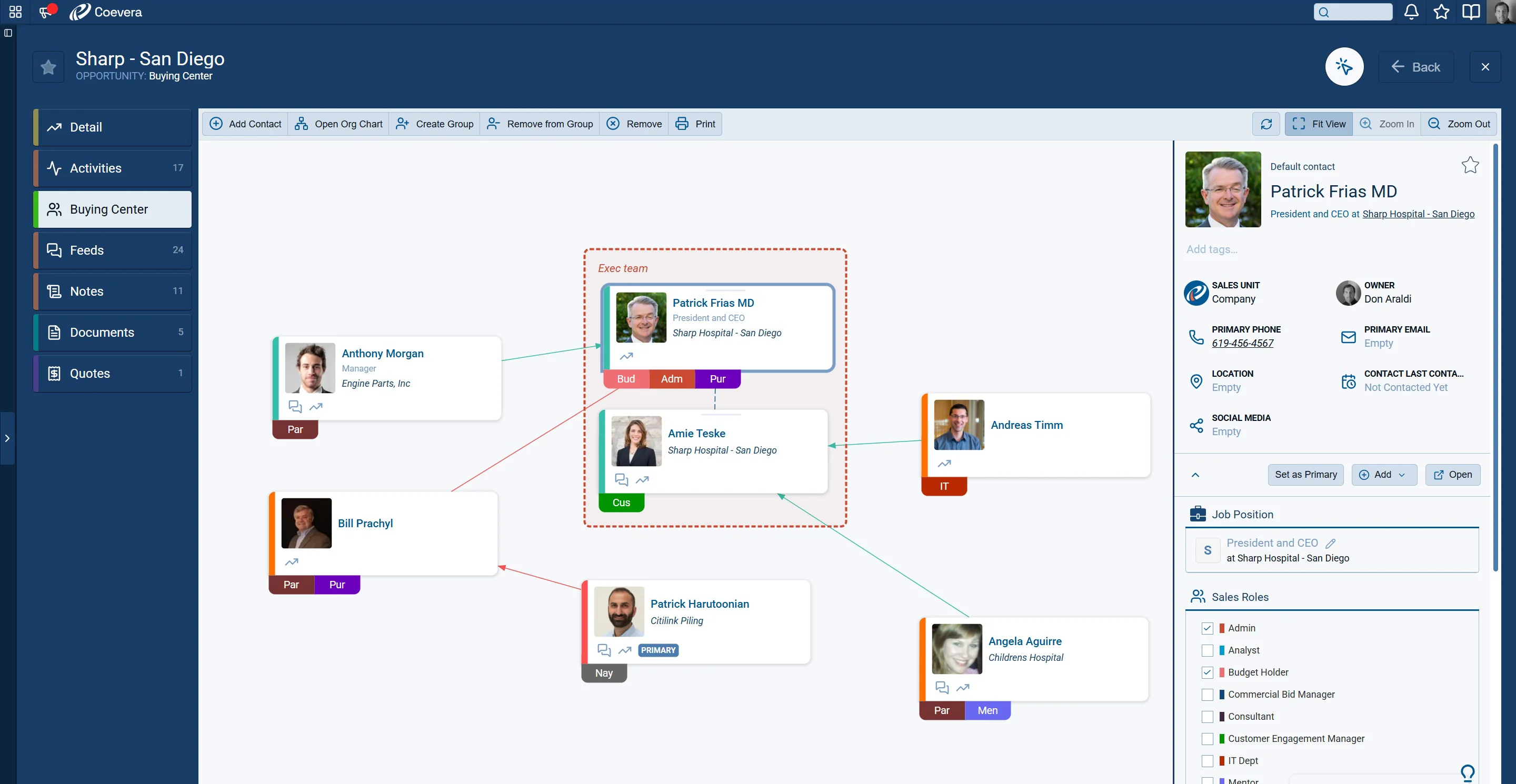
Wealth creators and peace producers
This matters far beyond the deal. Step back from the pipeline for a moment.
What is a salesperson at the deepest level? Mises answered this question almost in passing. He argued that society is built on the division of labour and voluntary exchange. 'But if the tailor goes to war against the baker, he must henceforth produce his bread for himself.' The alternative to trading with one another is doing everything ourselves, which would make us poorer, more isolated and more hostile.
Every voluntary sale is a small act of social cooperation. Two parties each give up something they value less in exchange for something they value more, and both parties are better off as a result. This quiet miracle was understood by the Austrians before anyone else: exchange is not zero-sum. It creates wealth that did not exist before the two of you sat down together.
And it achieves something even greater. Trade is a great alternative to force. Montesquieu called it doux commerce — commerce softens manners. People who buy from and sell to one another have a constant incentive not to destroy each other. Merchants and salespeople are, quite literally, agents of peace. Every honest transaction is a vote for cooperation over conflict.
It's this idea that I keep coming back to, but which our industry forgets the moment it becomes fixated on quotas and forecasts. Salespeople are wealth creators and peace producers. They are the human interface of voluntary exchange — finding the buyer's true need, matching it to a real solution and making cooperation happen one conversation at a time.
The co-evolution
So here is where it all lands: the co-evolution. AI can now read the emotion in the room. Good. Let it. This frees up humans to do the work that only they can do: to understand the reasons why, carry the history, make ethical decisions and vouch for things. Menger's subjective value, Hayek's tacit knowledge, Damasio's bodily signal and a model that can finally recognize some of these things too are not in competition with each other. They complement each other.
The Salespreneur is not being replaced by a machine that reads emotions. They are being amplified by it and freed to fully embrace the oldest and most honourable role in commerce.
Creating wealth. And to keep the peace. Win together.