Ever had that feeling when you look up from your desk and realize something has changed, but you can't quite put your finger on it? That's where I'm at right now. I want to talk about it because I think a lot of you are feeling something similar.
Working with AI in earnest
For the last few months, my team and I have been working with AI in earnest. Not just messing around. I'm not trying out different ideas on the side. I'm really putting in the hours, working on the things that matter every day. And then, out of the blue, everything changed.
I've been trying to work out what changed. I'll do my best and get seven observations in there. It's not a framework. Not a methodology. Here are just seven things we've noticed about ourselves.
1. We're not as smart as we thought we were
Let me start with the hardest one.
For most of my career, I just assumed that experience and intuition were the same as wisdom. I mean, there's some truth in that. But working with AI every day is a real eye-opener, to say the least.
I learn something new every day. I thought we'd settled some questions, but now they're being reopened with a new angle. The weird thing is, it doesn't feel any less impressive. It feels like being twenty-five again, when everything was new and curiosity was what got you out of bed in the morning.
I had forgotten what that felt like. It turns out that becoming a continuous learner again is one of the best things to come out of all this.
2. The drawer is empty
Every leader's got a drawer. It's that place in your mind where all those tasks you don't really want to do sit and fester. The analysis you keep putting off. The document you don't have the energy to draft. The research project that feels like too much to start on a Tuesday.
That drawer was full to the brim. It isn't anymore.
Things we used to leave for weeks now get done in hours. It's not that we're working harder, but because the energy needed to get started has dropped. When the cost of starting becomes low, the tendency to avoid things disappears. And here's the thing I realized: most of those dreaded tasks weren't actually that difficult. They were just feeling a bit lonely. AI made them all work together, and that changed everything.
3. We started to notice what wasn't really necessary anymore
Once you can get through your work quickly, you start to see it differently. You can see patterns quite easily. It turns out that the things we thought were really important were just habits. Reports that no one reads. Meetings that have always existed, and still exist today. Steps in workflows that nobody can quite explain.
AI didn't tell us what to get rid of. It just gave us back the time and the headspace to ask the question honestly. And once we asked it, the answers were all around. We've got back hours, days, even weeks for things that really matter.
4. I'm not saying that everyone's going to make the leap, but I do think it's important to be honest about that
When you're working with AI, it's not a case of just slapping on a new layer over the way you're doing things already. It's a different way of thinking. You've got to learn to ask better questions, to iterate in dialogue, to delegate intelligently, to verify and judge rather than just do.
The people on my team who've adapted are getting on so well, it's honestly incredible. The work that used to take three people and a quarter now only takes one person and a week. People who don't get it and see it as a threat or a gimmick are going to get left behind. It's not that anyone's going to leave them behind, it's just that the rest of the team is moving at a different pace now.
5. The contribution is pretty much settled at this point
I don't tend to exaggerate. So when I tell you that AI has increased our daily output by a factor of ten, I'm not just saying that for effect. A year ago, we couldn't have imagined doing some of the things we're doing on a Tuesday morning now.
And I was pretty surprised to find that I can actually multitask now. Not the fragmented, distracted multitasking that I'd grown to hate, but real parallel work. AI can take things forward while I focus on what only I can do. It's not just what I get done, but what I can keep in my head at once that's changed. My capacity feels different.
Feel the difference yourself
Coevera is built to give your team back the hours and the headspace — try it free, no credit card required.
Start free trial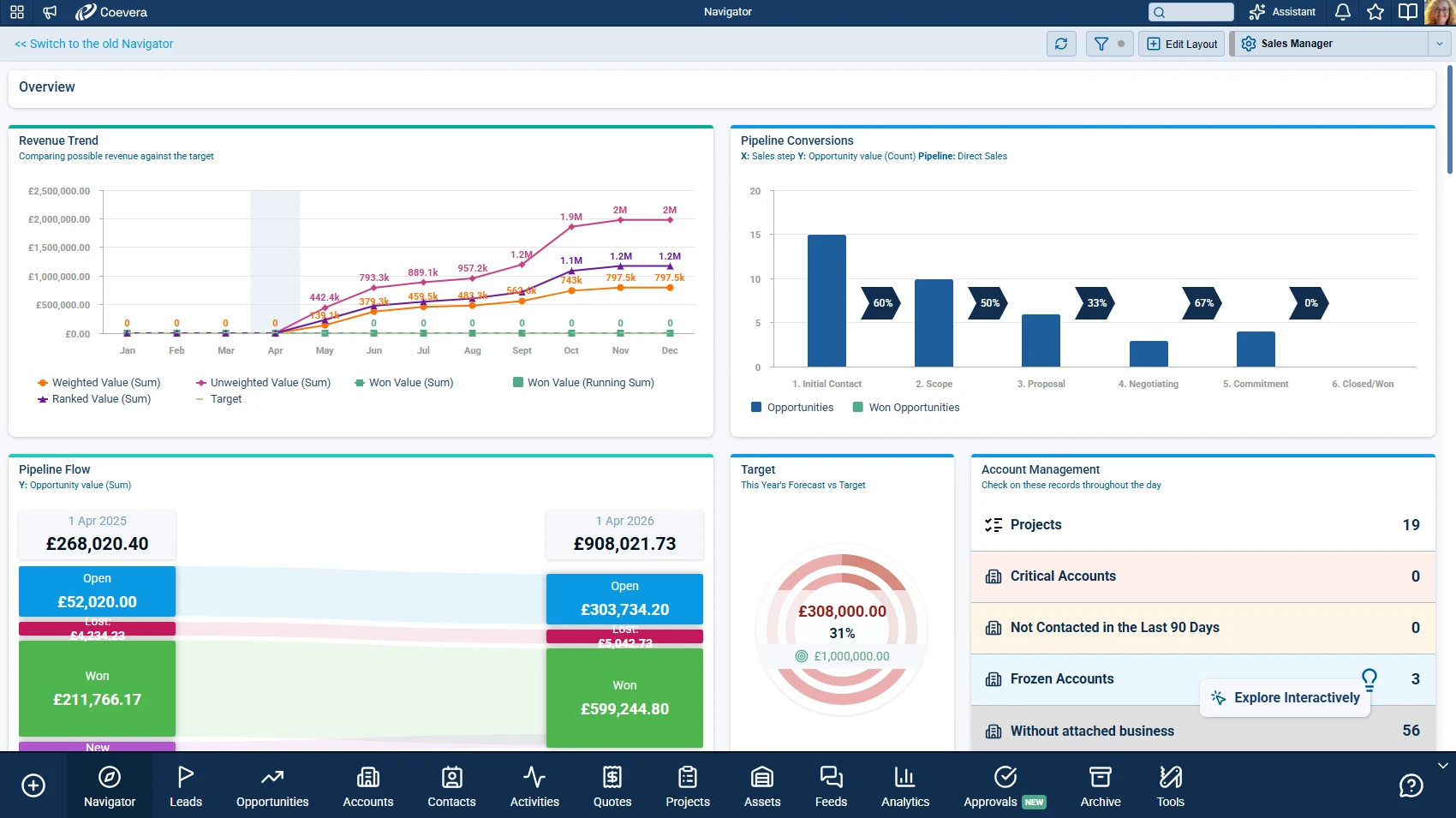
6. The centre of gravity has shifted, but the work hasn't got any easier. It's changed quite a lot
We spend less time actually making stuff and more time deciding what to make. It's better to spend less time on the drawing and more time on the judging. Instead of spending all your time gathering information, you should be spending more time synthesising it. The most important skill now is taste, the ability to know what good looks like when it's right in front of you.
That's the skill I'm working hardest to develop in myself and in my team. In a world where producing stuff is cheap, picking well is everything.
7. We're having another one of these
This one definitely caught me off guard. And it's the one that matters most.
For a long time, work had become a series of obligations. They're important and meaningful, but they're a lot of work. At some point, the joy that got us into building things in the first place got lost under all the process and pressure and the sheer weight of running a business.
It came back.
I can see it in my team. I can feel it in myself. There's a lightness to our days now that I can't fully explain. It's like we're finally doing the kind of work we were meant to be doing, without all the parts we never really liked in the first place. We're building, creating, exploring, deciding. We're just using the parts of our minds we developed as leaders.
It's been ages since work felt this good.
— Nikolaus Kimla