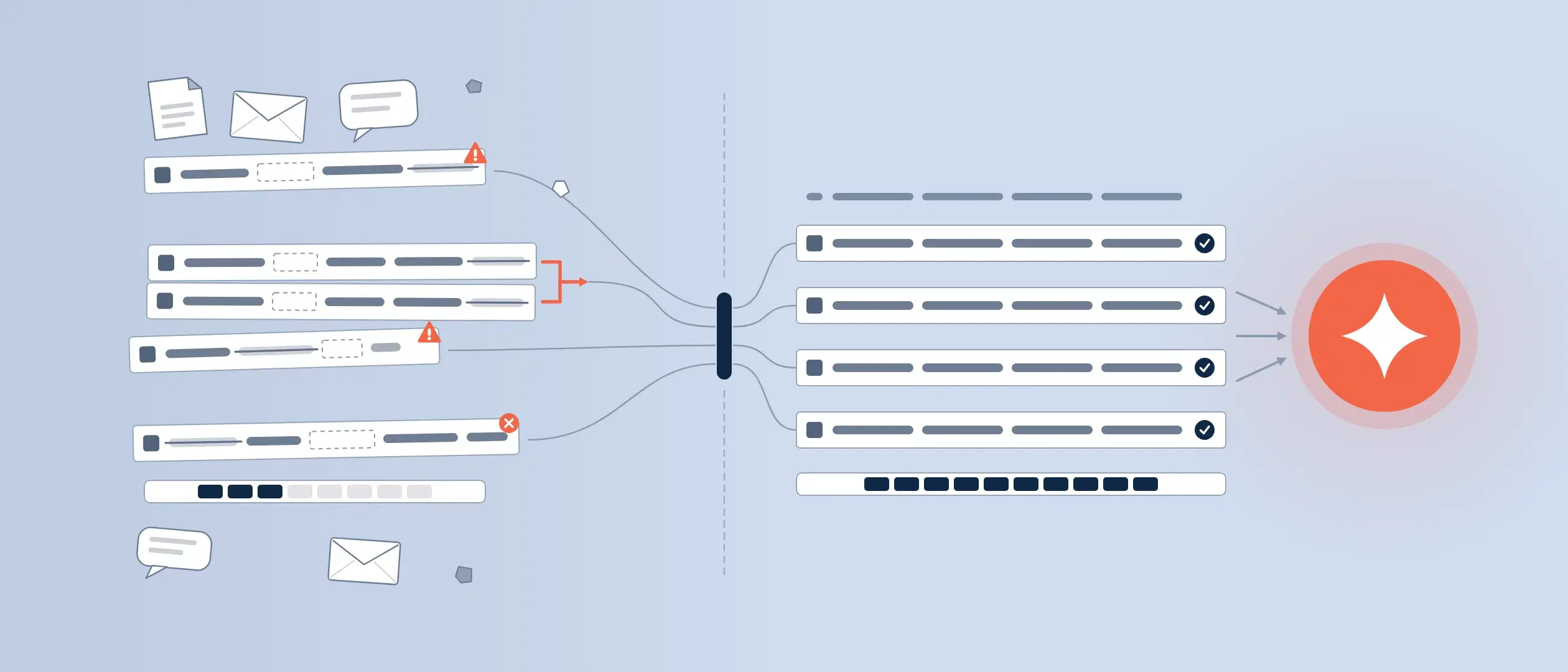
Today and onward, it becomes crucial that CRM is not isolated, but as fully integrated with other systems as possible. Why is it so important? Today, data must flow seamlessly from one end of the company to the other. It should be like a river that never runs in separate steps but flows freely.
What Does the Data Flow Contain?
That data flow includes your company’s most crucial information: every customer’s core data—their current interest, their past purchases, every interaction with your organization, every request, and any support tickets.
Is There Really a “Total Suite”?
A 360-degree business view is obviously necessary. That is why some vendors become tempted to offer a “total suite” for nearly everything. There are open-source tools available in the CRM space for every function, with a module for each. Some larger vendors have a suite approach for a company’s main functions—something we do not do because we know our product is not an ERP, marketing automation, or a ticketing system.
A complete suite like this is offered by, for example, one vendor, Zoho. When you subscribe to Zoho.com, you have a CRM, bookings, forms, financing, human resources, legal, security and much more. It seems that you could run the whole company on Zoho, but no one actually does that.
No vendor’s offering can possibly fulfill all functions for all companies. It should set out and succeed at dealing with a single major issue, and do so extremely well.
Key insight: the author calls the BI-tool detour a costly mistake — importing data from every system into a business-intelligence tool just to make decisions wastes time and money, since integrating those systems directly into CRM gives the same 360-degree view far more efficiently.
Applications Communicate with Each Other
It is true, however, that each system in a company must communicate with every other system. In our last article, we discussed the fact that there are many tools to enable such communication, from connectors to APIs and middleware.
Setting aside technical issues, this inter-system communication is very important just from the business perspective. Each of these systems should be integrated, step by step, into your CRM system. If this is not the case, you can never obtain reports on the data flow throughout your company, and you have no real overview. All the various systems, then, act as silos.
An ERP system can be found in almost every medium to large company, and the ERP and CRM should always be integrated. As we discussed in our last article, at least enable ERP data to flow into, and be viewed from, CRM, if you are not ready to share data bidirectionally.
As an example, any customer’s purchased products or services should be known. What have they paid for? Which invoices are still open? Are there products and services that could be offered based on their previous purchases?
CRM integration is done so that you can steer your “ship” toward its correct destinations.
Some organizations have imported data into a BI tool from all their systems, and make decisions based on the BI data. This is also an inefficient way to go and is costly in terms of time and money. It is much more efficient to integrate CRM.
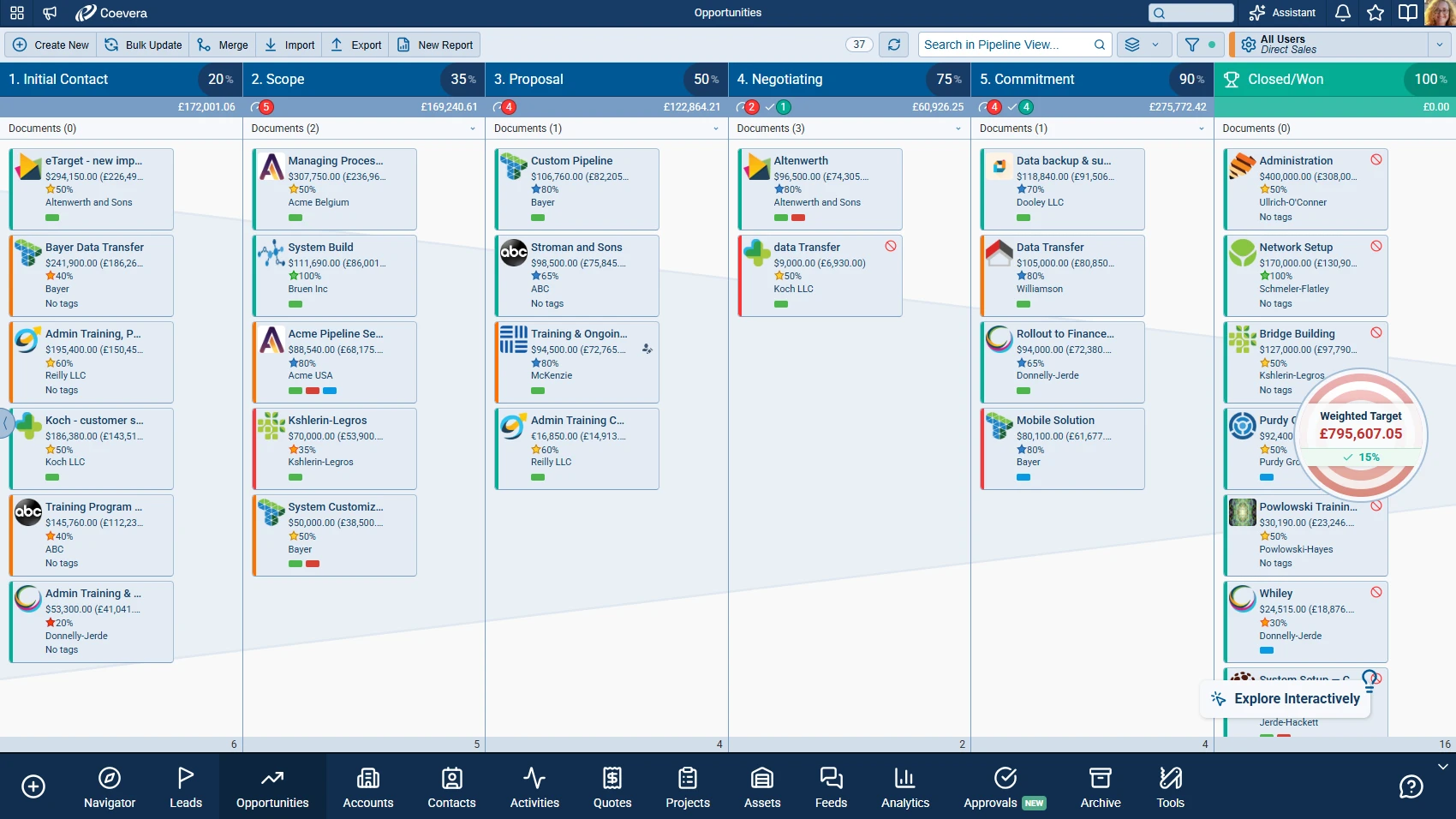
Coevera allows salespeople to take control of their opportunities, remain consistent through every stage of the sales process, and always stay focused on important priorities. It's the CRM that salespeople actually enjoy using.How Complex is This Undertaking?
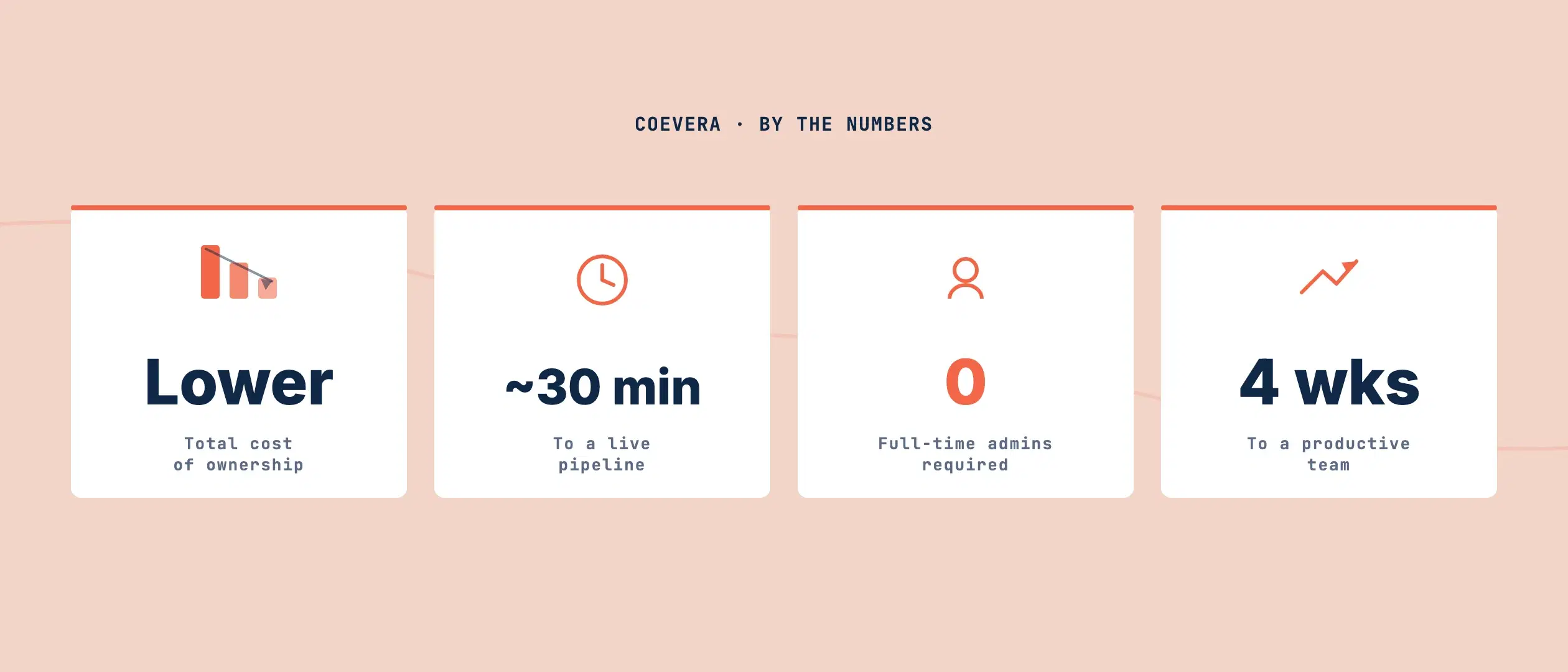
In times past, integration was indeed complex. This is no longer the case.
You needn’t start out by detailing every possible system relationship. Begin simply and proceed in iterations based on requests from your team. Building system relationships with CRM, you can then easily report on all the main functions of your company.
The primary sticking point for integrating CRM is often its lack of priority by management. Management must make that decision and guide the company through it.
Begin from the top down and with your first important iteration. And make it happen!
What happens when the sync stops is documented as a build in Blueprint 009.
You Must Do It, However
You’ll never realize the beauty, use and benefit of CRM as long as you are not progressing toward CRM integration. The CRM should be your company’s core, its operating system, much like an operating system is the core of a computer system. It should be the hub that connects all of your departments and systems.
A good amount of integration is provided by Coevera right out of the box. We have built-in integrations with Office 365 and G Suite for efficient and effective communication with your customers. We integrate with ZenDesk, giving you a “best-of-breed” ticketing system. We have built-in integrations for many more.
For the complete view of your customers, you must then fully integrate your ERP and legacy systems with CRM.
What makes this integration so important? Without a total relationship with your customers—customer relationship management—you have no company. The customer pays for everything: your rent or property tax, electricity, product or service product, and storage.
The 360-degree view required by your company is provided by this integration. It offers sharp focus, bringing efficiency, productivity, and profitability.
It’s easier than ever today. For Coevera, we’re here to help you take the proper first steps, your first iteration.
It really boils down to a company’s willingness to make CRM the core system of your company. You’ll understand and begin executing in the right direction at that moment.