The water in this case gathered for over a decade in a protected artesian aquifer beneath the Austrian Alps — naturally filtered, untreated, bottled exactly as it emerges. We didn't send it because it's expensive. We sent it because of what it took to get it right, and because that happens to be the argument we've built our company on.

Selling is not physical work, which is exactly why the physical inputs get ignored. But look honestly at the shape of a selling day.
Hours of speaking moves a surprising amount of water out of the body through respiration alone. Most people never account for it.
Cabin humidity on a commercial flight sits far below comfortable indoor levels. A long flight is a dehydrating event before the first meeting even starts.
Back-to-back calls are fuelled by caffeine, not fluid. The cup feels like hydration. Largely, it isn't.
Discovery, objections, pricing, when to push and when to wait. Every one is an executive-function call made under time pressure.
The research here deserves to be stated carefully, because it is often overstated. The evidence is not uniform — some crossover trials find no significant effect. But the broadest meta-analyses converge on a threshold: at around 2% loss of body mass, measurable declines show up first in sustained attention, and then in executive function and motor coordination. Thirst itself only becomes distinct as you approach that same 2% — which is the uncomfortable part. The sensation arrives at roughly the point where performance has already begun to move.
Nobody is claiming water closes deals. The claim is narrower and harder to argue with: the difference between a sharp fourth call and a foggy one is rarely strategy. It is far more often sleep, food and fluid — and fluid is the one input you can fix this afternoon, for free, without a training program.
That line comes from The Clean Source, written by Claudia Kimla-Stern. It was meant to be about the body. It turns out to describe a sales organization just as precisely.
Your body runs on it. It carries oxygen and nutrients to every cell, clears what you don't need, cushions the joints, regulates temperature, and holds the whole system in balance. We optimize the sophisticated inputs and ignore the fundamental one.
There is also a longer-horizon finding worth knowing. Work published in eBioMedicine reported that adults with serum sodium in the normal range — a marker of being well hydrated over time — were less likely to show signs of accelerated biological ageing. Hydration is not only about how you perform on Thursday afternoon. It is one of the quiet, cumulative inputs that decides what kind of decade you have.
Both of those things are true. Neither is a marketing decision. They are both consequences of the same standard.
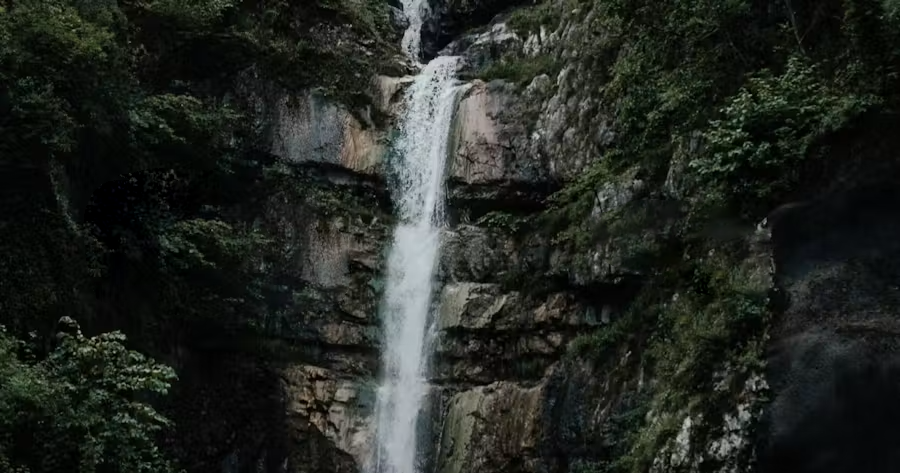
The water does not originate in the Dachstein region — it originates above it. Its source is a single immense mountain of pure calcium carbonate. Snow and rain falling on the summit filter down through more than 4,500 feet of rock over decades before collecting in the aquifer below.
A protected aquifer replenishes at its own rate. You cannot increase the yield by wanting more of it, and you cannot process a lesser input up to this standard — processing is precisely what this water avoids. So supply is finite and it moves by subscription, direct from source to door.
Retail distribution would mean warehousing, handling, and a supply chain built for volume. That is a different product with the same name on it.
Which reframes the cost question. You are not paying a premium for branding. You are paying for a decade of geology, an untouched source, and a refusal to correct the water on the way to you. Set against what a company already spends per head on software, travel and coffee, it is a rounding error attached to the one input the body cannot substitute.
Neither family set out to be a company. Both started as a question asked at a table, by Austrians who had made their life in America and refused to lower a standard they had grown up with.
Karlheinz Muhr brings an expert on inflammation to the family's private think tank. The family decides to change what they consume — starting with sugar and fructose, then the chemicals and preservatives in food, and ending with water.
A search for the purest water they can find, anywhere. Not a product search. A standard they wanted for their own children.
A protected artesian aquifer, 700 feet beneath the Hallstatt region of Upper Austria. Naturally sealed, naturally filtered, already complete.
Seventeen years after the question was asked. Direct from source, by subscription, untreated.
Shaped by the Austrian School: the individual is the decision-maker, value is subjective, and small purposeful choices compound into whole systems.
Nikolaus Kimla moves his family to the United States. Not with a business plan — with a view that sales systems don't need replacing, they need understanding.
Nearly two decades learning where sales organizations actually break: fragmented tools, short-term thinking, software nobody adopts.
A CRM built around the salespreneur — the professional who owns outcomes, not just tasks. Formerly Pipeliner.
What you consistently give it, it becomes. Not immediately — but never randomly either.
A level of quality preserved, not created. Once the source is compromised, no amount of processing recovers it.
The system through which people perform, decide, and create value — or lose time and clarity, quietly, every day.
Water offers one more lesson, and it is the most useful one for anyone running a pipeline. Water does not force its way anywhere. It finds the path of least resistance and takes it — and where the path is well formed, the flow is effortless and never stops.
Leads behave identically. They do not move because someone pushed them. They move because the path was built properly: clear stages, no dead ends, nothing asking a seller to fight the system in order to use it. A pipeline that has to be forced is a pipeline with the wrong shape. That is a design problem, not an effort problem.
Most sales systems fail the way a body does: fragmented tools, outdated methods, short-term thinking. Coevera was built the other way — from the inside out, on nearly two decades of watching where sales organizations actually break down.
At its center is the salespreneur: the professional who doesn't just execute tasks but takes full ownership of outcomes, decisions, and long-term performance. The CRM's job is to reduce friction and get out of their way — not become one more system to maintain.
If you lead a sales organization, the argument has to survive a budget conversation. Here is the version that does.
Salary, enablement, travel, tooling, coaching. All of it assumes the person shows up capable of sustained attention and clear judgment. Hydration is the cheapest protection that assumption has.
Sending someone the purest water in the world, monthly, is an unmistakable statement about how the company regards them. It arrives at their door, not in a payslip.
Nothing here works in a week. That is the point. Health, like pipeline, is built by consistent inputs over years — and it is the only kind of advantage competitors can't buy in a quarter.
None of this requires believing anything extravagant. It requires believing that the physical condition of the people making your commercial decisions is a business variable rather than a private matter — and that if you accept that, you should act on the cheapest, most fundamental input available before optimizing anything more sophisticated.
That is the same logic Coevera applies to the sales system itself. Fix the foundation. Let it compound. Stop repairing.
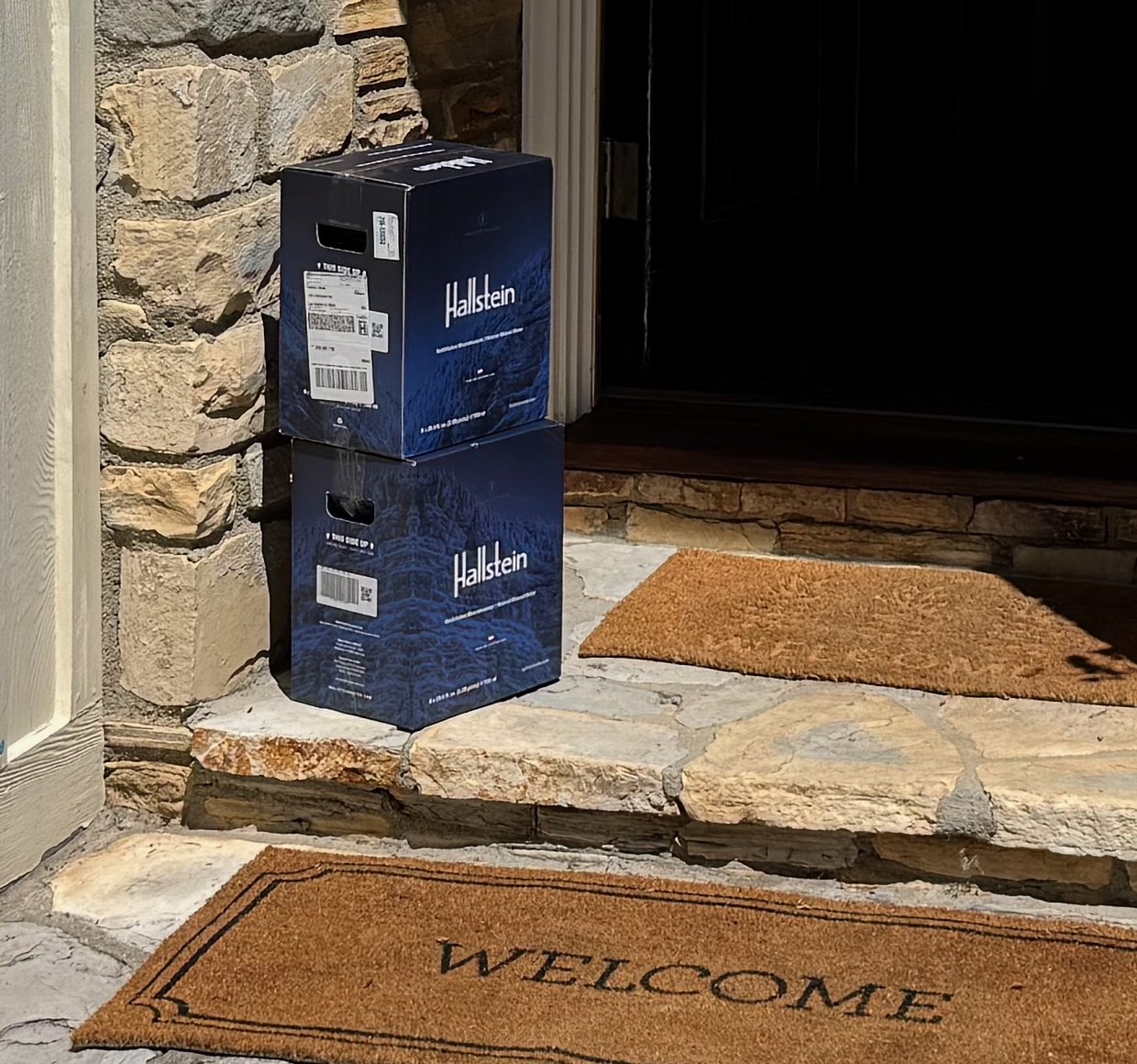

A six-bottle case is USD 58 on a monthly subscription. Set against what a company already spends per head on software, travel and coffee, that is the cheapest input on the list.
Thirty minutes, no deck required. We'll look honestly at where your sales system loses time and clarity today — and whether Coevera is the right clean input for it. If it isn't, we'll tell you.